It was around the time the fifth glass in the wine pairing was poured with a sidecar pre-dessert treat of coffee with rum that I turned to Top Chef judge Gail Simmons, sitting to my right, and asked sheepishly, “When you guys are taping, do you drink this much at all your dinners?”
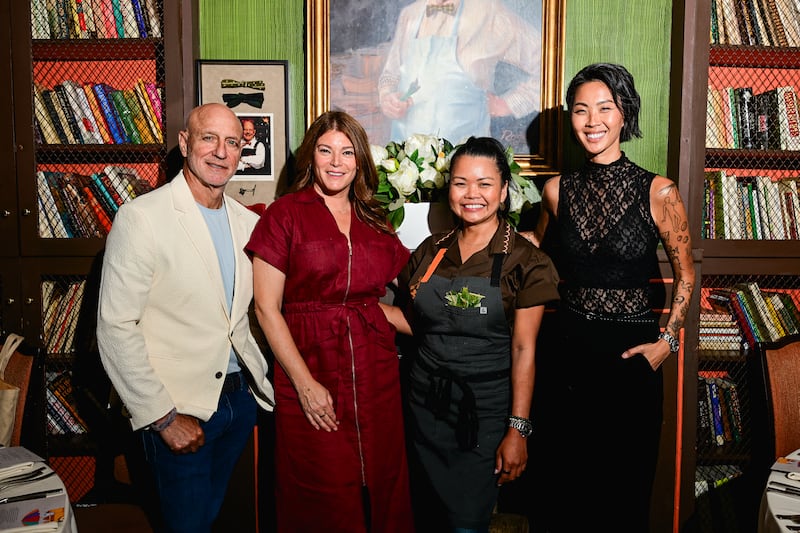
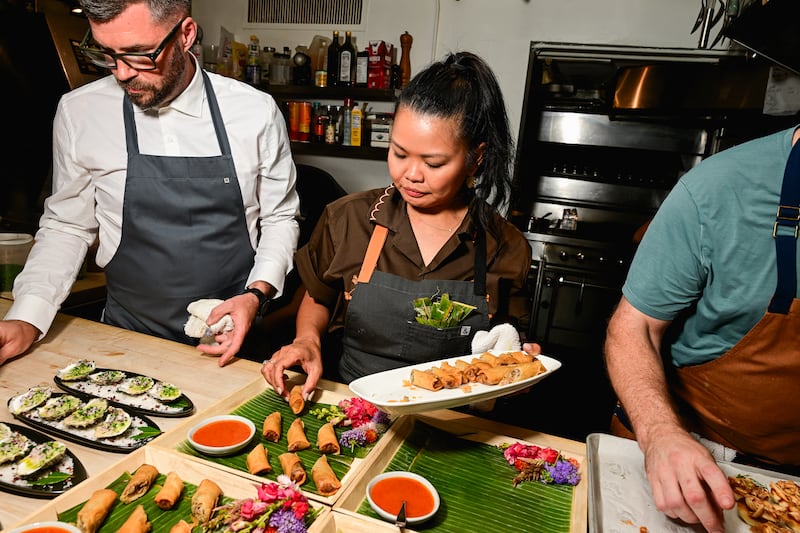
She let out a loud laugh and an emphatic, “No!” just as it was time to raise a glass again, this time to Top Chef Season 23 winner Rhoda Magbitang, who just finished serving us a tasting menu of exquisite Filipino food: lumpia, langoustine lugaw, pork belly adobo, oxtail, and a truly gluttonous amount of local specialties—including a surprise “snack” of pig ear skewers.
We’re at the historic James Beard House in New York City’s Greenwich Village, the culinary cathedral where the legendary “dean of American cookery” once lived—legend is that the alcove in the southeast corner of the dining room is where Beard used to sleep with his large bare feet sticking out the window—and is now the venue for career-milestone meals prepared by the country’s greatest chefs.
The honor of serving a dinner at the James Beard House for Bravo and Top Chef producers and executives, local restaurateurs, foundation members, food critics, and, apparently, me (!) is part of the Top Chef winner’s prize package.
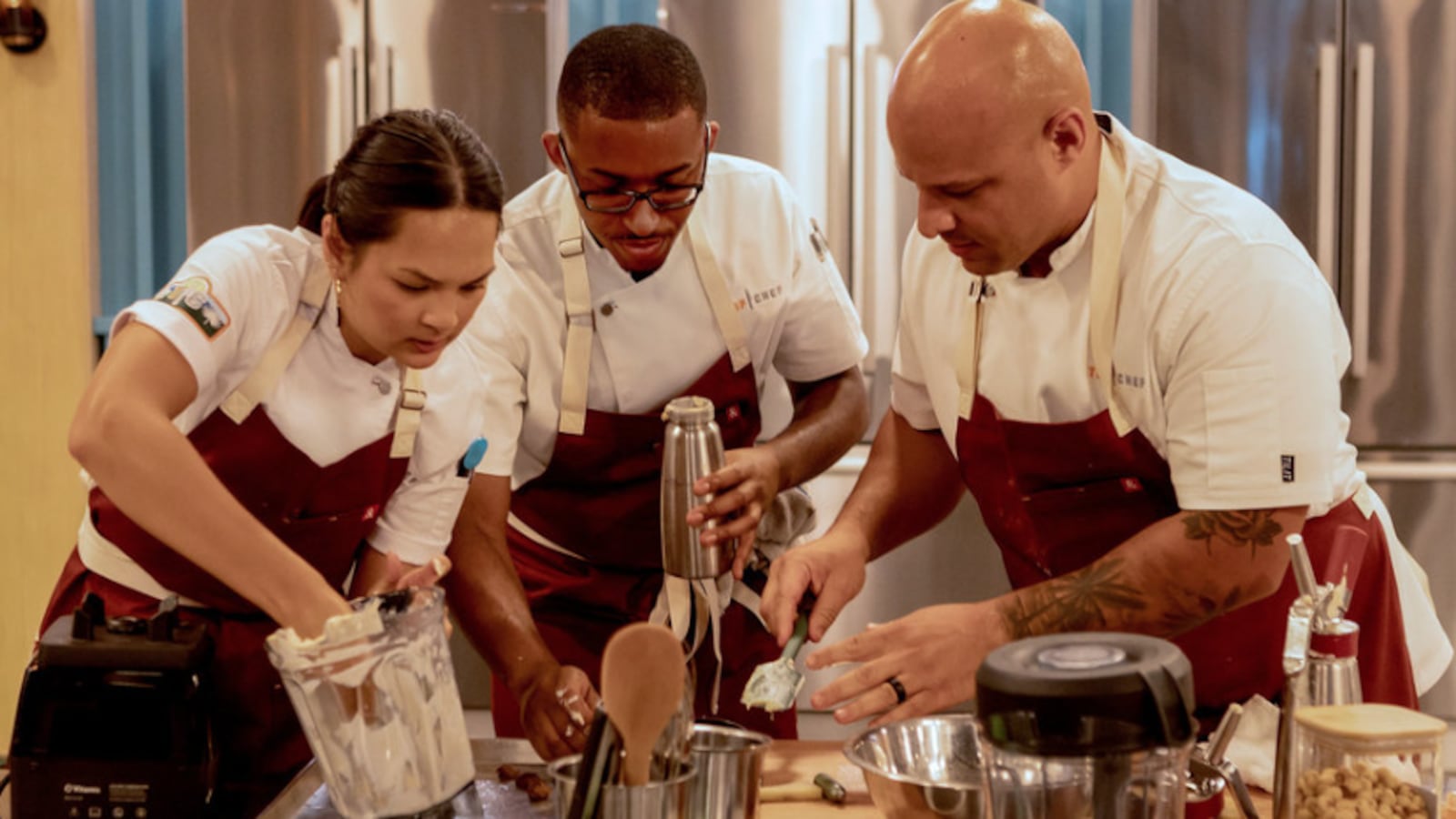
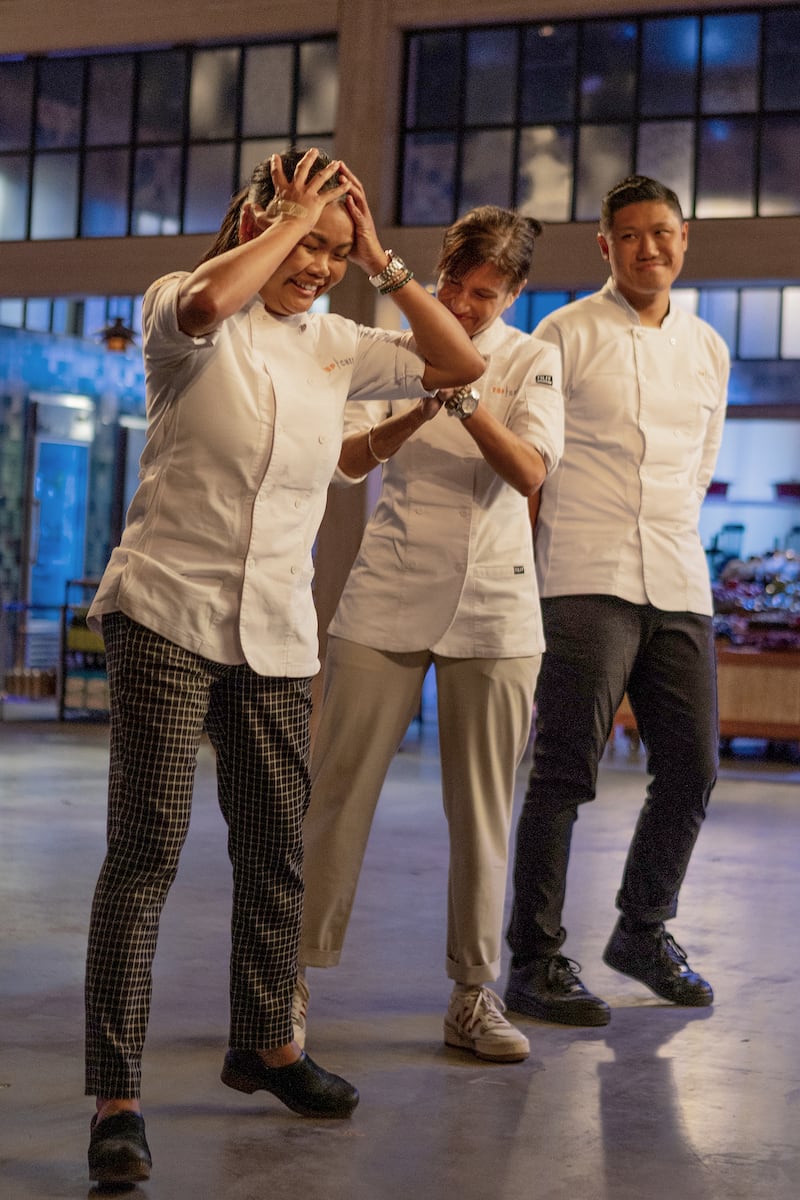
Magbitang’s “Island to Island” menu is a celebration of her dramatic, thrilling victory: She made history as the first contestant to win the first two challenges, before being shockingly eliminated soon after, returning to the competition after surviving the Last Chance Kitchen redemption gauntlet, and then winning the whole damn thing.
The occasion is also a well-timed victory lap for the show. It is once again nominated for the Emmy Award for Outstanding Reality Competition Series—a huge accomplishment for a show in its 23rd season—among four total nods, including one for Kristen Kish as Outstanding Reality Host.
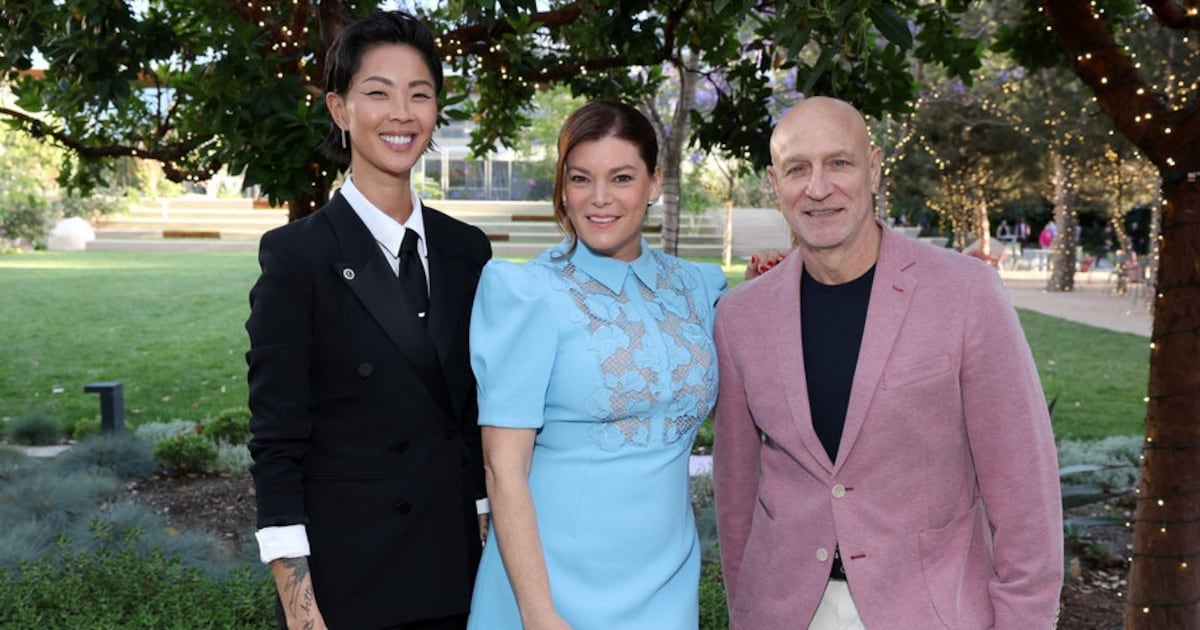
It’s fitting that the drinks were flowing, then. There was certainly reason to toast. Especially since, as I learned chatting with judges Simmons, Kish, and Tom Colicchio before the dinner—and gossiping up a storm with Simmons during—there is a reasoned, though still humble, sense among everyone involved in Top Chef that, this year, they really do deserve the trophy.
Top Chef has been nominated in its reality category for every season it’s been on air. One of the best bits of Emmy Awards trivia is that, after the category was created in 2003, The Amazing Race won the first eight consecutive years, a streak that had some people in the industry wondering what the point of the category was if the same show was just going to keep getting the trophy.
It was a massive surprise, then, when Top Chef in 2010 became the first reality competition that wasn’t The Amazing Race to win—something pop-culture juggernauts like American Idol, Dancing With the Stars, or Survivor hadn’t been able to do. It was the darkest of dark-horse victories. “When we won, our joke was, like, someone forgot to tell the crew of The Amazing Race that the voting was open, because how is it possible, right?” Simmons said.
Everyone was in disbelief. Simmons has a picture of herself and then-host Padma Lakshmi reacting to the announcement hanging in her office. “We jumped out of our seats. My husband says we looked like meerkats jumping out of the desert. We were in such shock. Our hair and our arms and, like, we’re just flailing. We were screaming our heads off, running down the aisle like mad women.”
The category has since reverted back to its pattern of one series dominating year after year. The Voice had a good run, followed by RuPaul’s Drag Race and The Traitors.
“We’re overdue,” Colicchio said. “It’s always good because, when we’re in the audience at the Emmys, we always get the loudest applause. So I guess, even if we don’t win, that feels good. I’d rather win.”
Given that Top Chef is, as its annual Emmy nomination proves, kind of always good—as a fan, I can confirm that—it’s hard for the judges to surmise what might intangibly make for a particularly great season that could really warrant winning, like the recent one set in the Carolinas.
“It’s like anything. You come up with a new dish, and you think it’s good, and, for some reason, the diners don’t react to it. It’s kind of hard, because you’re too close to it,” Colicchio said.
“Every fan watches the show differently,” said Kish, who also appeared as a contestant on The Traitors this past year in addition to hosting and judging Top Chef. “You can have in the same breath as Traitors and any reality show, people are like, ‘Love it,’ and they’re like, ‘It’s the best season yet.’ And then you have the other side saying, ‘Worst season.’”
“I know what we did for that show and what, for our, for our season in the Carolinas,” she continued. “It was f---ing outstanding. I watched it week after week, and I got to see the interviews play out, and I got to see the personalities of the chefs. It gave me everything I wanted: great food, a little bit of drama, and an arc of a winner. It gave personalities, different cultures, different ways of thinking about food. It did all the things.”
It’s almost too cutesy, given the Top Chef food of it all, to observe how the Outstanding Reality Competition Category compares what is essentially apples to oranges (to, like, filet mignons and cupcakes and spinach).
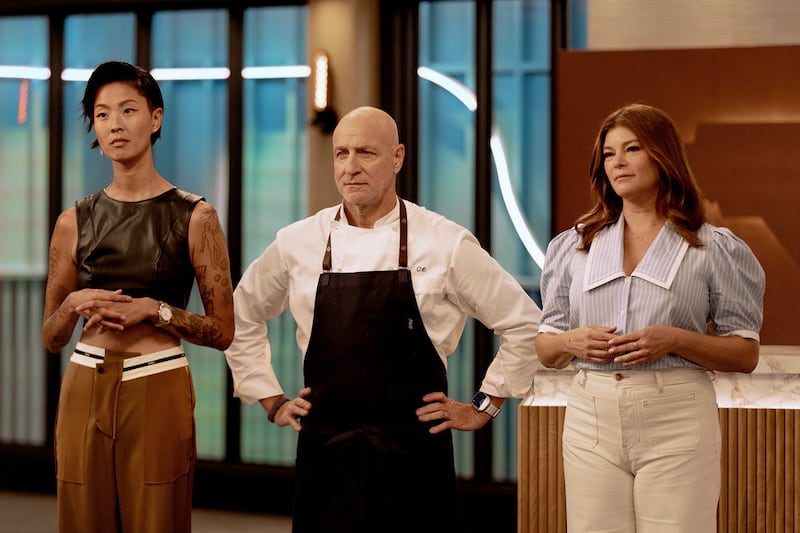
This year finds the series nominated against celebrities doing the cha-cha-cha on Dancing With the Stars, drag queens exhuding fabulousness on RuPaul’s Drag Race, a castle full of reality stars plotting a game of murder in The Traitors, and everyday people trying to outwit, outplay, and outlast on Survivor. Past years have had aspiring singers, globe-trotters, and, um, Donald Trump in the mix.
“I do think of all these different skills on all these different shows, whether it’s dancing or singing or surviving or dragging—that’s probably not the right term, but you get the picture.—or murdering, of all of these skills, the one universal skill, the one universal human trait is food,” Simmons said. “Most people can’t dance. Most people wouldn’t have the confidence to do drag, to murder, or whatever it is. But everybody eats, and I do think that that does hold weight.”
At the same time, all three judges want to make it clear that this isn’t a homey little show that’s easily shot on a kitchen set on a soundstage.
“Our show is filmed on location,” Colicchio said. “We gotta pick up and build a kitchen and move crews and move contestants. There’s a lot of unknowns, and it’s much more difficult than if we set a studio and shot a studio show.”
“You’re taking real-life chefs who need real working conditions to create real food that real people are gonna eat, and you do that in the middle of a field,” Kish said. “Then you go off into f---ing who knows where, reset on a racetrack. Snakes everywhere. Then you go back and reset. It is a moving circus.”
What’s been impressive about the show, particularly in the last several years where Kish joined as a host and judge, is how relatable that circus is. There were moments in this Carolina season where Kish consoled a contestant who was on the verge of a panic attack, broke down in tears while discussing with a chef whether he should leave the show to be with his ailing girlfriend, and talked another competitor through a fourth-wall-breaking meltdown when he was eliminated.
“It felt very different for reality TV, especially reality competition,” Colicchio said. “Maybe that’s the secret sauce that’s going to do it.” (As in, earn Top Chef its long-awaited second win.)
“I think Top Chef has remained where reality TV still meets humanity, and still meets the impact of a real-life industry that we all, we all take part in, which is food and restaurants. So with that, it would be weird if I did not have emotion behind it. It would f---ing feel weird.”
And with that, it was time to eat dinner.