Airlines are set to feel the sting from President Donald Trump’s war with Iran if the blockade of the Strait of Hormuz continues, the European Union has warned.
The European Commission said Thursday that while fuel markets have so far absorbed the effects of the war through higher prices rather than supply shortages, this could soon change.
Oil prices have surged since Trump, 79, launched his war on Iran more than three months ago due to the closure of the Strait of Hormuz, a narrow shipping lane through which one-fifth of the world’s oil flows in peacetime.
After its latest meetings with its oil and gas co-ordination groups, the European Commission’s energy department said that “the closure of the Strait of Hormuz impacts both crude oil and all major petroleum products, and that all EU countries are affected by the dynamics.”
“So far, the EU has been experiencing price effects, with no physical supply disruptions at consumer level,” it said in a news release.
It continued, “However, if the situation does not improve in the next weeks, markets are expected to become increasingly tighter, especially for jet fuel.”
The White House did not immediately respond to a request for comment.
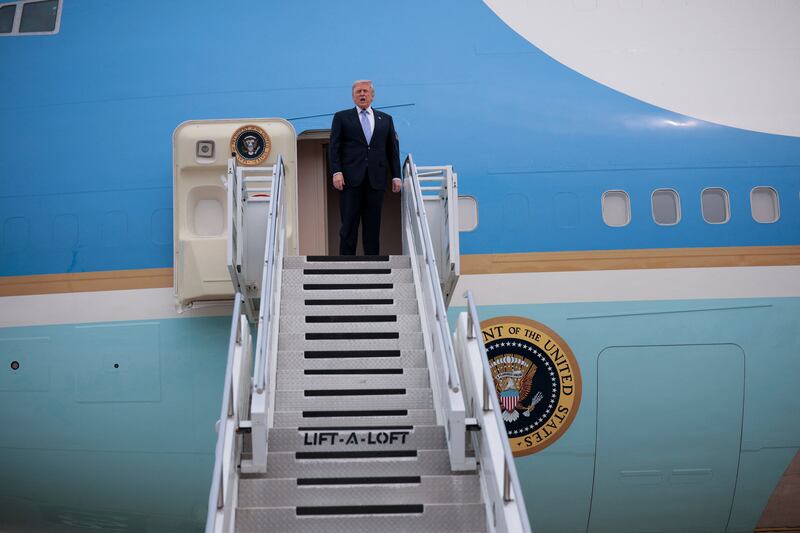
A prolonged squeeze on jet fuel supplies threatens to drive up costs for European airlines while putting additional strain on airport fuel distribution systems.
A squeezed jet fuel market would increase stress on airlines and airport supply chains, according to Traders Union.
Jet fuel in northern Europe soared to an all-time high of $1,904 per tonne in early April, over twice its prewar price, and was still trading near $1,328 per tonne last week, the Financial Times reports, citing Argus Media.
Still, for now, oil refiners say Europe is likely to avoid outright jet fuel shortages this summer, though the peak travel season is expected to serve as a major “stress test” for the sector, according to the Financial Times.
Beyond the summer, however, the market’s outlook hinges on the ongoing negotiations between Trump and the Iranian regime.
Senior officials on both sides told The Washington Post on Thursday that they have reached a tentative agreement to end the war and reopen the Strait of Hormuz.
However, they said that Trump and his counterparts in Tehran are still reviewing it. Moreover, the fragile nature of the negotiations was underscored by the exchange of drone and missile fire between U.S. and Iranian forces near the Strait on Wednesday night.
Treasury Secretary Scott Bessent told reporters Thursday that Trump has “several red lines,” and that “nothing is going to be on the table” unless Iran agrees to reopen the Strait of Hormuz and to surrender their highly enriched uranium and give up their nuclear program.
It remains unclear whether Iran will accept those terms, with the regime insisting it has an “inalienable” right to nuclear technology.