While Washington has been consumed by fights over budgets, tariffs, immigration, and foreign policy in recent weeks, a quieter but deeply consequential development has received little attention: the destruction of inspector general independence, and a broader pretense of independent government oversight crashing down.
Two Trump-appointed inspectors general—the officials charged with conducting independent oversight of federal agencies—appear to have stopped pretending to be neutral and instead actively participated in advancing administration initiatives. The watchdogs have crossed a dangerous line. They’ve become lapdogs.
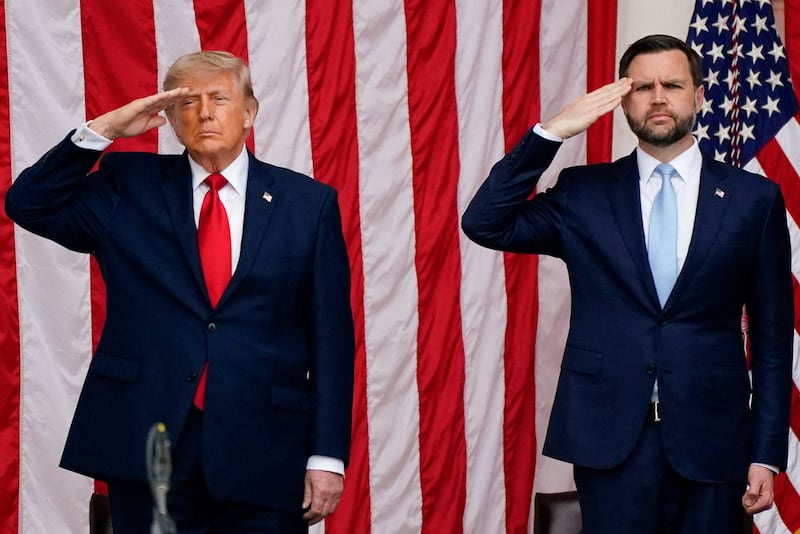
T. March Bell, the inspector general of the Department of Health and Human Services, issued letters to the heads of each state’s Medicaid Fraud Control Unit (MFCU) with threats to cut off their Medicaid funding. IG Bell’s letters make clear that he is positioning himself and his office to be part of the administration and contributing to its broader fight against fraud. Therein, he laments prior HHS leadership failures and declares that “under President Trump and Vice President Vance’s leadership, that ends today.” Those are not the words of an independent oversight official. They are the words of someone identifying his office with the very administration he is supposed to oversee.
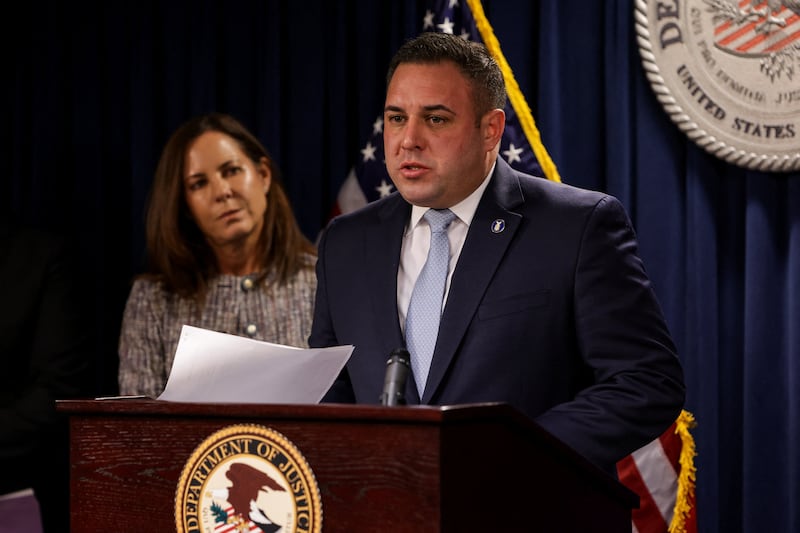
Department of Labor Inspector General Anthony D’Esposito, meanwhile, issued a joint directive with the acting Secretary of Labor demanding that financial institutions freeze nearly $1 billion in unspent funds tied to COVID-19 unemployment insurance fraud. In an interview this week, D’Esposito openly and boldly embraced his role as a supporter of the Trump administration’s agenda, publicly declaring that he will not hide his conservative views or his support for administration priorities.

These developments may seem obscure. They are not. Inspectors general serve as some of the federal government’s most important safeguards against waste, fraud, abuse, and corruption. When watchdogs begin acting like political or operational partners of the agencies they oversee, American taxpayers lose one of their most important protections.
To be clear, the problem is not the administration’s focus on fighting fraud in these cases. The problem is that inspectors general should not be working toward an administration’s policy goals. IGs are supposed to serve as independent watchdogs within federal agencies, not operational partners in executing agency policy. Their role is to oversee programs impartially, much like umpires calling balls and strikes.
That distinction exists for good reason: officials who help implement a policy cannot later impartially evaluate whether that policy was lawful, effective, or properly executed.
As the former Chair of the Council of the Inspectors General on Integrity and Efficiency and former inspector general of the Department of the Interior, I have witnessed firsthand how carefully IGs historically avoided entering the policymaking arena. They bend over backward to avoid even the appearance of participating in agency operations. Respecting that boundary is a core principle of the inspector general community, but Bell and D’Esposito have barreled through it.

Their actions also appear inconsistent with the Inspector General Act itself. To preserve independence, the Inspector General Act expressly prohibits agencies from transferring “program operating responsibilities” to inspectors general. But Bell’s letters and D’Esposito’s directive certainly appear to veer into agency operations or at least to position their efforts in tandem with their agencies. It is deeply ironic that Bell’s letter demands “rigid” compliance with federal law while violating the very law governing inspector general independence.
But the larger issue goes beyond legal technicalities. The appearance of impartiality is not a cosmetic concern. It is a core safeguard that allows whistleblowers, agency employees, Congress, and the public to trust that inspectors general will follow facts wherever they lead. Inspectors general do not serve political parties or political movements. IGs serve taxpayers. Yet Bell’s letters repeatedly align the office politically with the administration; they amount to political statements that blur the distinction between watchdog and advocate. D’Esposito, meanwhile, has already developed a pattern of partisan public statements and social media activity.
Their actions represent a dangerous break from longstanding inspector general norms. The effectiveness of any inspector general depends on one thing above all else: credibility. Americans rely on inspectors general to serve as Congress’s eyes and ears inside federal agencies, investigating misconduct, exposing waste and fraud, and providing objective oversight of programs involving billions of taxpayer dollars. IGs must be trusted as independent arbiters who follow facts wherever they lead, regardless of politics; if IGs are perceived as political actors or operational partners of the administration they oversee, their findings will inevitably be viewed through a partisan lens. Once that credibility is lost, the entire oversight system begins to erode.
The danger is not simply that two inspectors general crossed that line. It is that doing so risks normalizing the idea that IGs are extensions of the administration rather than independent watchdogs accountable to the public. If that transformation takes hold, taxpayers will lose one of the federal government’s most important safeguards against waste, corruption, and abuse. Effective government oversight only works when watchdogs remain independent and free from political influence.