

It’s easy to be skeptical of yet another Selena Quintanilla project.
The late “queen of Tejano music” received an iconic, Jennifer Lopez-led biopic in 1997, but since then, many accounts of her life and artistry have skewed lazy at best and downright exploitative at worst. Netflix’s Selena: The Series faced pushback from critics and fans alike for sidelining its main character in favor of her relatives and former bandmates. A few years before that, a ghoulish Selena hologram tour nearly made the rounds in 2018.
What, then, does the new documentary Selena y Los Dinos—now on Netflix—have to add to the conversation about a star whose legendary rise and devastating loss still looms so large in pop culture? While the overarching beats of Selena’s story presented here will hardly surprise loyal fans, Isabel Castro’s film sets itself apart through a rich trove of never-before-seen archival footage shared by Selena’s sister, Suzette Quintanilla.
Through these clips, Selena y Los Dinos is the rare project that—rather than being overshadowed by the tragedy of the 23-year-old “Como La Flor” singer’s murder by fan Yolanda Saldívar—stands as a joyful tribute to her life and legacy.

We open at Selena’s famed 1995 Houston Astrodome concert, as she takes the stage in a sparkling, bright purple jumpsuit to triumphant fireworks and rapturous applause from thousands of fans.
The film then jumps back in time to outline the basics of the Quintanillas’ origin story. Family patriarch Abraham Quintanilla, Jr.—a former member of the original Los Dinos band—gave up his music dreams to earn a living at Dow Chemical in Lake Jackson, Texas. Then he heard his youngest child, Selena, singing at just six years old, and a lightbulb went off in his head. Abraham assembled a family band around Selena’s already-infectious stage presence and beautiful voice, recruiting his son A.B. to play bass and Suzette to play drums (in an early home video, he affectionately introduces a tiny Selena as “the little coyote”).

When Dow Chemical closed, the newly formed Selena y Los Dinos became the family’s main source of income. At the time, Abraham’s kids preferred listening to English-speaking acts like Duran Duran and Van Halen. Still, he was resolute in his belief that they would be most successful performing “Tejano” music: a blend of Mexican cumbias, polkas, and American rock and country music.
Watching the Quintanillas open up about fighting to appeal to both Mexican and American fans is a striking testament to how the reception of Spanish-language music and bicultural identity’s larger cultural presence has shifted from the ’80s and ’90s to now.
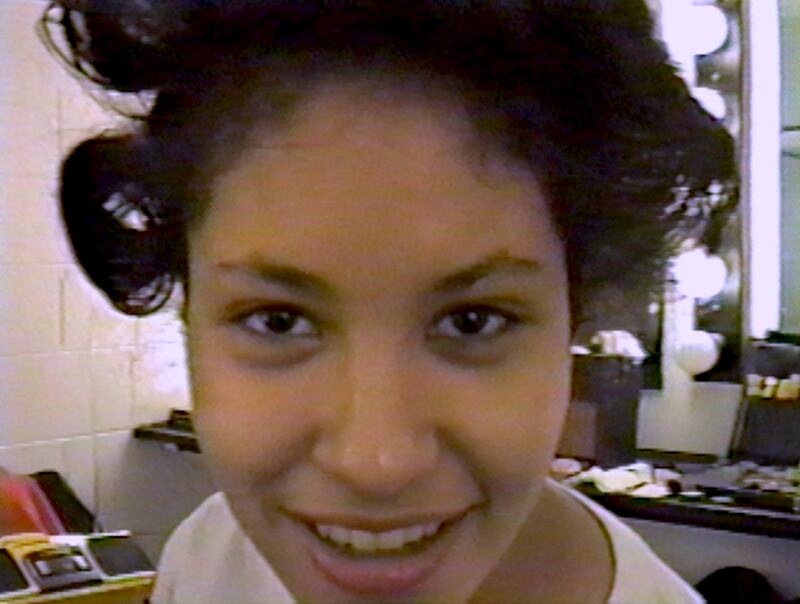
Selena, who, along with her siblings, grew up speaking English, had to learn fluent Spanish to break into the music industry. Over the course of the film’s interview clips, she slowly grows more visibly comfortable speaking in her second language.
Her family, too, are open about the struggles they faced being made to feel too “exotic” for white American audiences and too American for Mexican audiences. Much of that pressure inevitably fell on Selena, who remains an icon for Latino-Americans in large part because of her ability to represent the duality of her own identity (the Quintanillas reached out to Castro about directing this documentary after seeing her 2022 film Mija, which followed two aspiring Mexican-American singers).

It’s difficult to watch Selena y Los Dinos and not think about the fact that Puerto Rican singer and rapper Bad Bunny is currently preparing for his 2026 Super Bowl halftime show, which will make history as the first to be performed entirely in Spanish. Even if Castro’s film doesn’t explicitly frame Selena’s legacy in the modern context of Spanish-language music and Latino diasporic art’s global explosion in popularity, the importance of her work comes across, regardless.

Because this project is narrated by the Quintanillas and—apart from the final moments—set squarely within the chronology of Selena’s life, Selena y Los Dinos rarely strays from its wholesome family focus.
We briefly hear from Selena’s family and husband, her former bandmate Chris Pérez, about how the couple dated secretly and eloped against Abraham’s wishes, but the fallout of that tension is almost immediately swept under the rug. This relative omission is particularly glaring given that Pérez’s long legal feud with the Quintanillas over his wishes to turn his 2012 memoir into a miniseries only ended in 2021 (the family were involved in both the Selena film and Selena: The Series). Likewise, more recent reports of the Quintanillas’ company, Q Productions, threatening legal action against Selena impersonators are nowhere to be seen.

Still, nearly two hours’ worth of footage makes Selena feel like a much more active character than she has in other retellings of her story. She may not be here to elaborate upon her own experiences, but scenes of her hanging out in her family’s tour bus, “Big Bertha,” bickering with her sister over clothes, or somberly reflecting upon losing touch with her friends after leaving regular school do more to humanize her than trite, fictionalized remarks about the highs and lows of stardom ever could.
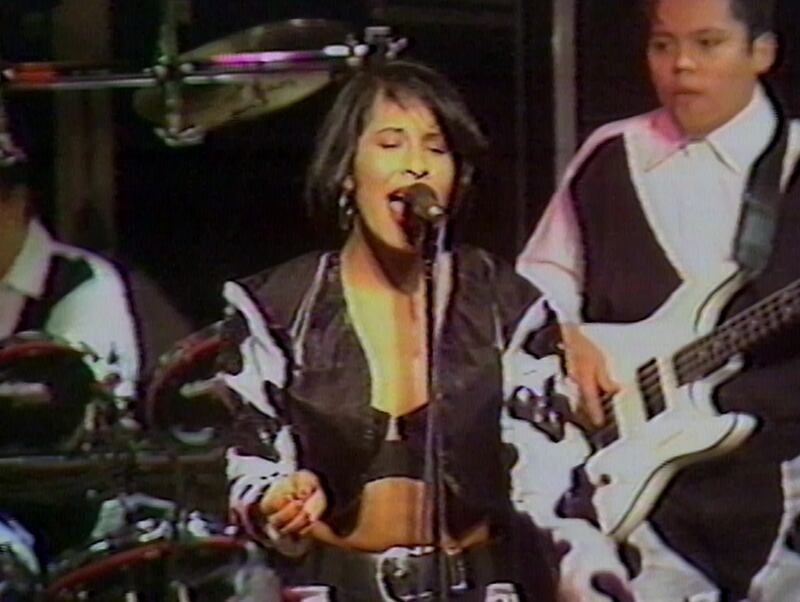
Despite Selena being constantly aware of how the music industry unfairly demonizes female artists it deems “difficult,” the film does justice to the ways in which she managed to challenge convention. Moments of her lighting up while discussing her fashion design or turning a TV presenter’s request that she turn to “show off her figure” back on him speak volumes about her tenacity—and serve as a heartbreaking reminder of how much more time she should’ve had to continue growing into herself.
It doesn’t feel coincidental that Selena y Los Dinos premieres just a few weeks after Dia De Los Muertos, a Mexican holiday in which the departed live through their loved ones’ memories of them. The film ends with the 2024 opening of the official Selena museum, interspersed with an interview clip of the singer asking how much longer the public will get to enjoy her music.
“It depends on the audience,” she replies. “How long I will be here is up to them. Until they want me here.”
If Selena’s hope was to live on through her musical legacy, Selena y Los Dinos is a powerful reminder that, all these years later, she got her wish.