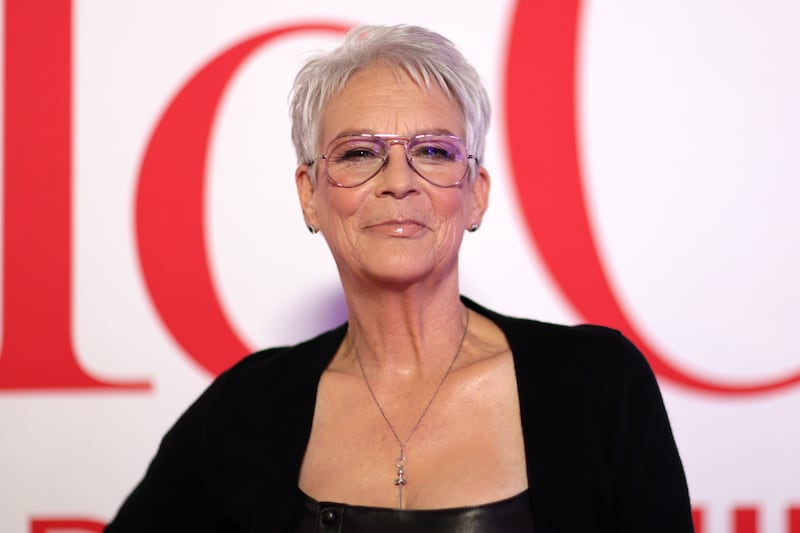
Oscar winner Jamie Lee Curtis does not look back fondly on the follow-up to her critically acclaimed performance in 1988’s A Fish Called Wanda.
Curtis, 67, told attendees during a featured session at SXSW in Austin, Texas, that when she and castmates reunited for 1997’s Fierce Creatures, it was a shameless cash-grab.
“I was shooting that piece of s--t, ‘Fish Called Wanda Two,’” she said, referring to the film. “We were on the back lot. It was awful. We all did it for money,” she added at the session, according to People, which was titled “Jamie Lee Curtis. If Not Now, When, if Not Me, Who? Pivoting and Manifesting!”
Fierce Creatures was indeed considered a critical and commercial failure. Its predecessor follows a group of criminals planning a diamond heist: a British gangster and his aide who recruit an American grifter (Jamie Lee Curtis) and a weapons expert (Kevin Kline), while a London barrister (John Cleese) becomes entangled in the scheme.
The comedy was well-received, with overwhelmingly favorable reviews. It was nominated for three Academy Awards, including Best Director and Best Screenplay. Kline won the Best Supporting Actor Oscar. (Curtis won her first Oscar more than four decades later for Everything Everywhere All at Once.)
The original Wanda made $62,493,712 domestically, according to Box Office Mojo.
Fierce Creatures, on the other hand, as an unofficial sequel, cast the actors as different characters and, according to critics, lost much of its allure in doing so. The film follows a wealthy American (Kline) who buys a struggling London zoo and hires Willa (Curtis) to manage it, along with its eccentric director (Cleese).
The highly anticipated film, buoyed by the success of the actors’ first, couldn’t make the jokes land with audiences that time around, only pulling in $9,381,260.
It’s not the only film Curtis has worked on that she now regards as a “piece of s--t.” She made similar comments about her 1999 film Virus, telling WENN in 2010, “That’s a piece of s--t movie. It’s an unbelievably bad movie; just bad from the bottom.”
She expressed similar regret about 1984’s Grandview, USA, the movie she said prompted her to promise herself to stop making bad movies—a promise she’d break with Fierce Creatures years later.
She told The Washington Post in 1985, “After I had an experience on a movie called Grandview USA, … I just made this decision to myself: I can’t make bad movies anymore.”