White House Press Secretary Karoline Leavitt has demanded that America’s allies “step up” and help Donald Trump’s war efforts, as most European nations refuse to get embroiled in the conflict with Iran.
Leavitt spoke out as Germany became the latest European ally to knock back Trump’s demands for help to break the blockade in the Strait of Hormuz.
“It’s not NATO’s war,” said Stefan Kornelius, spokesperson for German Chancellor Friedrich Merz. “NATO is a defensive alliance, an alliance for the defense of its territory.”
Speaking as the war enters its third week—with the standoff in the Strait fueling a rapidly worsening energy crisis—Leavitt said the president had been hitting the phones for days, urging other nations to “do the right thing” and help him reopen the Strait.
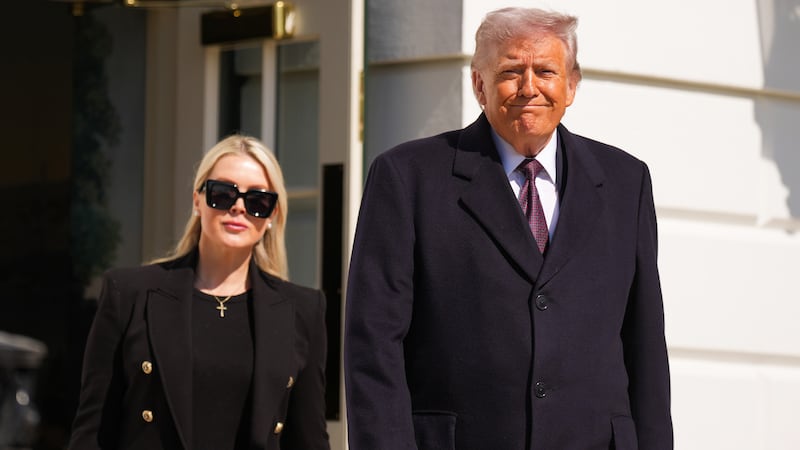
“President Trump is the first president in nearly five decades to finally have the courage to do what so many American presidents and leaders around this world have longed for, and that’s to take out the threat of Iran,” Leavitt told Fox & Friends.
“So yes, the president is speaking with our allies in Europe and also many of our partners in the Gulf and Arab world, to encourage them to step up, to do more to open the Strait of Hormuz—and our NATO allies especially need to step up.”

Leavitt’s comments came as the war is fueling pain at the pump for many Americans, thanks to the impasse in the Strait of Hormuz, a narrow waterway through which about 20 per cent of the world’s oil normally flows.
As tankers avoid the region and infrastructure disruptions ripple through global energy markets, oil prices surged last week above $100 a barrel, and the national average gas price on Monday hit $3.71 a gallon.

But the White House’s effort to rally allies has been met with a cool response, with many nations refusing to commit forces to a U.S.-led effort in the Gulf, wary of being drawn into a wider regional war.
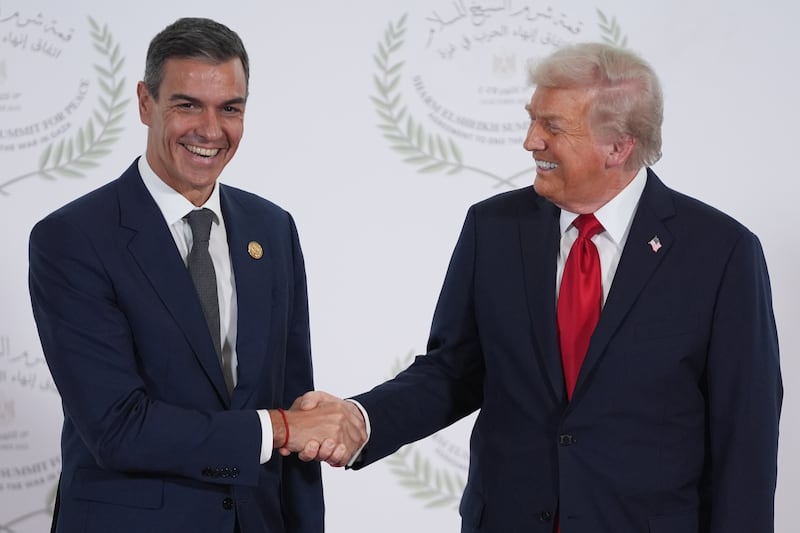
Spain has been the most explicit in rejecting participation, with the nation’s defense and military ministers declaring the war illegal.

The leftist coalition government led by Prime Minister Pedro Sanchez criticized the offense and banned U.S. aircraft participating in the operation from using jointly operated bases in southern Spain, calling instead for de-escalation.
Britain has said it will not be drawn into a wider war with Iran, though it is considering limited defensive contributions such as mine-hunting technology.
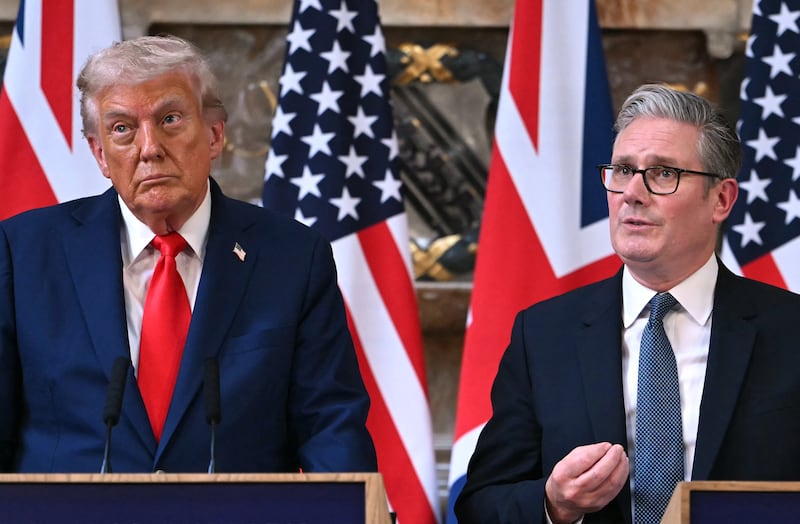
UK Prime Minister Keir Starmer also said he spoke to Trump on the phone on Sunday and would work with allies on a plan to restore freedom of navigation in the region “as quickly as possible” to “ease the economic impact” but added it would’t be easy.
“Ultimately, we have to reopen the Strait of Hormuz to ensure stability in the (oil) market. That is not a simple task,” Starmer told reporters.
Germany, Italy, and Greece have also reacted cautiously, signaling reluctance to join a military coalition in the Gulf, and countries more sympathetic to Washington’s position, such as France, have not committed ships.
Speaking at the White House on Monday morning, Leavitt said that Trump “wished the UK had stepped up sooner and quicker” with regard to his call for England to help open the Strait of Hormuz.
But the war could also end up delaying his long-awaited April meeting with Chinese leader Xi Jinping, with Leavitt telling reporters: “The president looks forward to visiting China.

“The dates may be moved. As commander in chief, it’s his number one priority right now to ensure the continued success of this operation, Epic Fury. So we will keep you updated on the dates soon,” Leavitt said.
Leavitt framed the conflict as a pre-emptive strike against Iran’s nuclear ambitions, saying that Trump was trying to defend the world from Iran “obtaining a nuclear bomb.”
But this comes despite intelligence assessments saying there is no clear evidence that Iran was on the brink of producing a nuclear weapon, and after Trump himself insisted last year that the regime’s nuclear program had been “totally obliterated” by America.