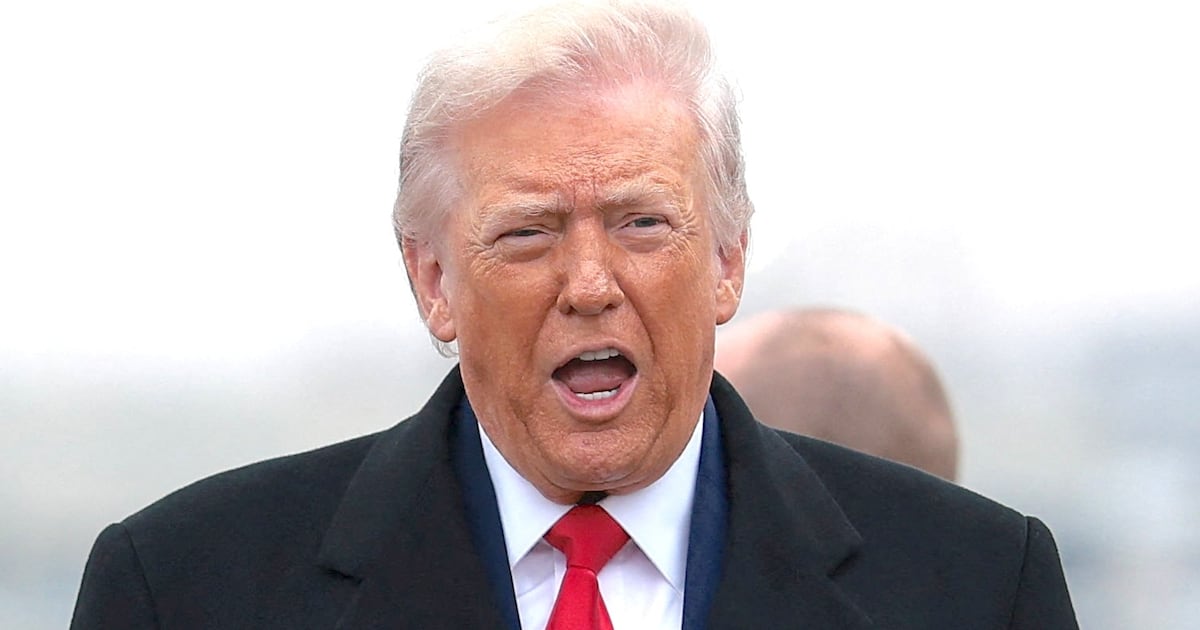
The shaky ceasefire between the U.S., Israel and Iran hasn’t yet led to the resumption of oil shipping through the Strait of Hormuz, Donald Trump admitted Thursday.
Trump, 79, posted a brief message on Truth Social some 48 hours after the two sides had come to a truce that has since been threatened in part by Israel’s attacks on Hezbollah in Lebanon.
The agreement was supposed to result in the reopening of the Strait of Hormuz, which Iran had shut down. But it’s not going according to plan.

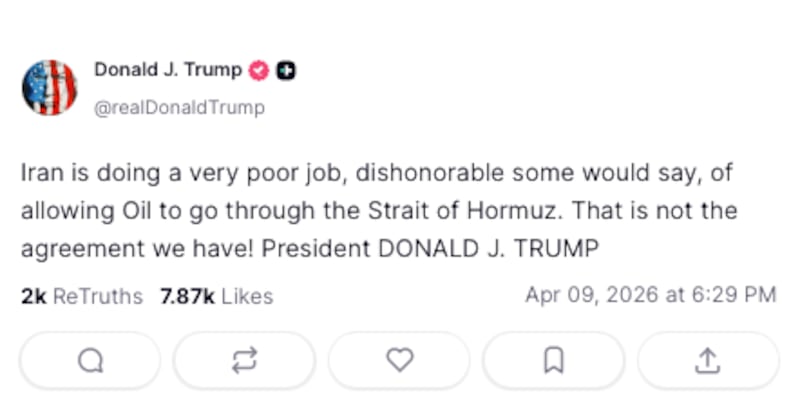
“Iran is doing a very poor job, dishonorable some would say, of allowing Oil to go through the Strait of Hormuz,” Trump wrote. “That is not the agreement we have!”
Only two oil ships have passed through the strait since the ceasefire announcement, CNN reported on Thursday, while more than 100 had done so daily before the war.
Shipping company executives and analysts told CNN that there are numerous factors that make transporting oil through the vital strait too risky at the moment. What’s needed from Iran, they said, are explicit safety assurances as well as guidance on the timing and manner of shipping, for instance.
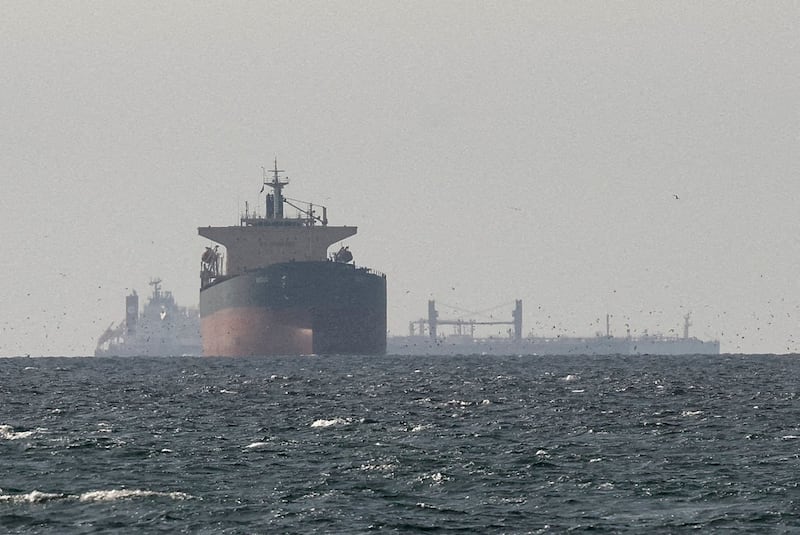
“Our top priority is the safety of our employees on land and on sea. Based on our current risk assessment we are refraining from transiting the strait,” a spokesman for Hapag-Lloyd, the world’s fifth-largest shipping company, told the network.
Global market analyst Lale Akoner of eToro estimated that normal traffic could return in six months.
Whether Trump will take action is unclear. The White House did not immediately respond to a request for comment from the Daily Beast.
Before the ceasefire, Trump also downplayed safety concerns in the strait. Amid threats of mines and strikes by Iran, he said oil tanker crews should just “show some guts.” Three cargo ships were struck soon after.
Approximately one-fifth of the world’s oil supply is shipped through the strait. The disruption of traffic naturally caused oil and gas prices to spike—something the Trump administration has claimed will be worth it in the long run for a less dangerous Iran.