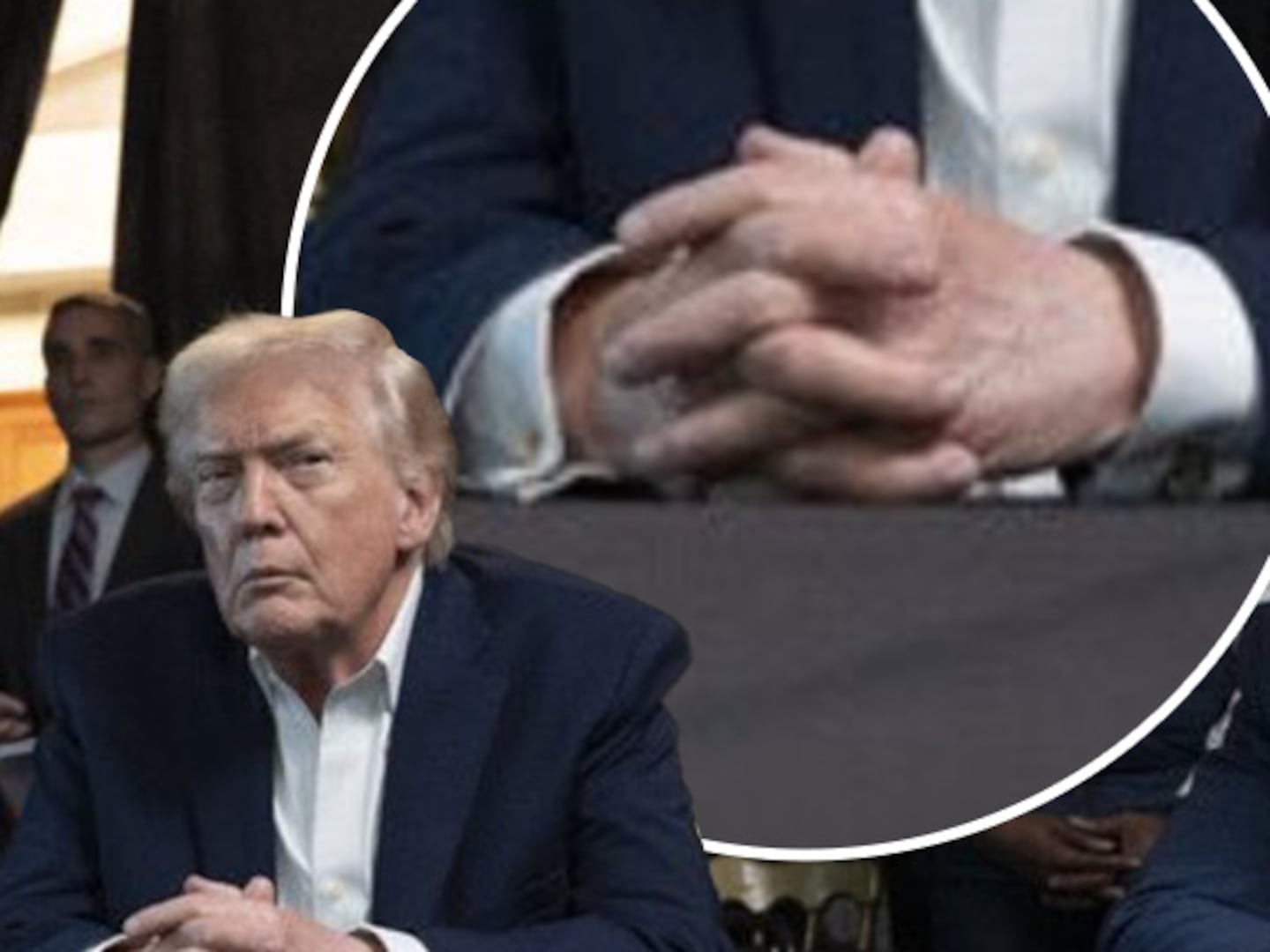

President Donald Trump used explosives twice on Saturday morning.
First he used U.S. air power to seize President Nicolás Maduro.
Then he blew up his team’s carefully crafted narrative about the legality of his invasion of Venezuela.
The president did not seek or receive congressional approval before ordering strikes against the oil-rich South American country, even though the Constitution requires Congress to approve any act of war. That might have given another president pause—but not Trump.
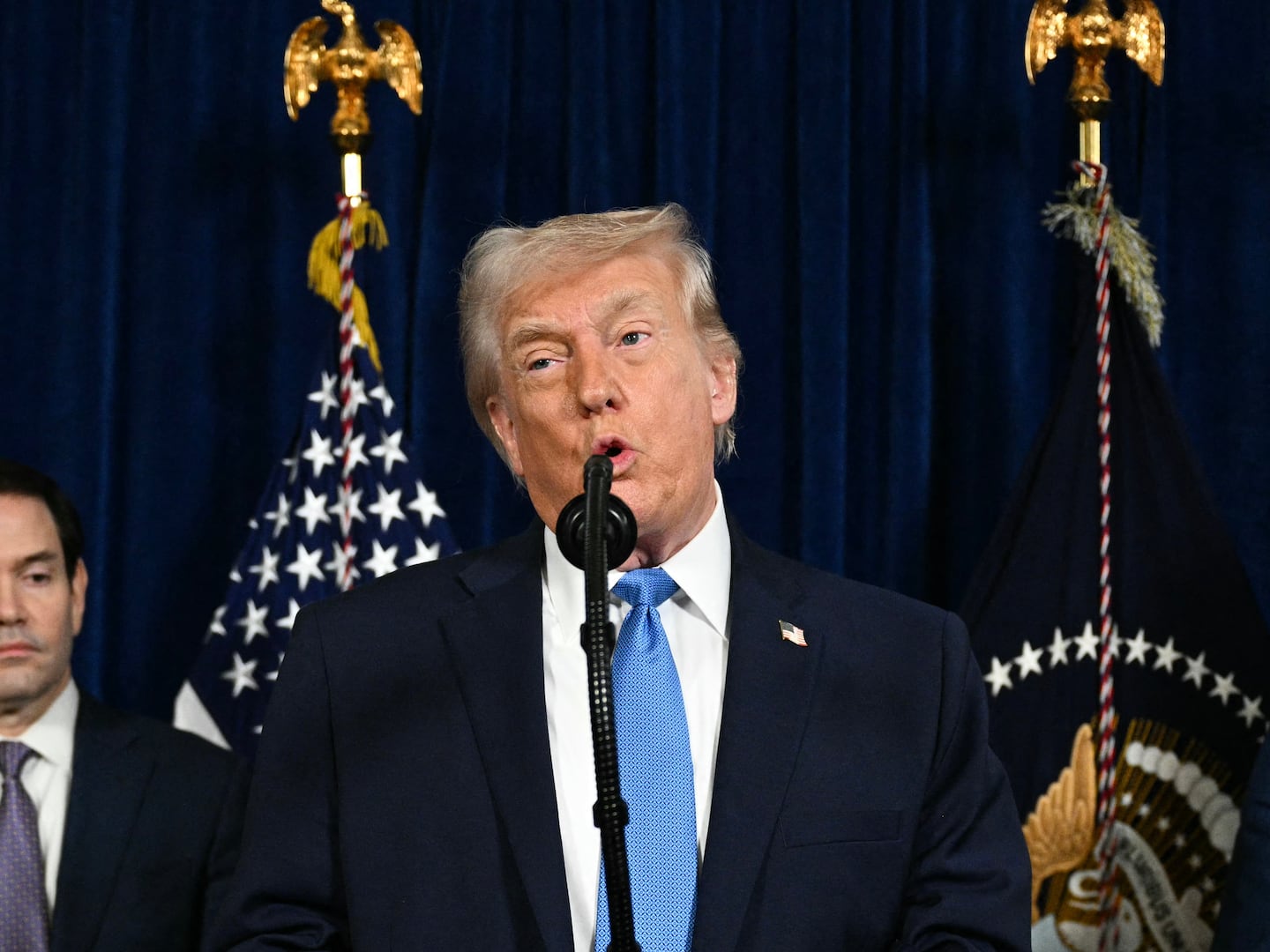
“We are going to run the country,” he said Saturday during a press conference in which he announced plans to seize Venezuela’s vast oil reserves.

“We are going to run it,” he added.
But his decision to take over a foreign country without Congress’s approval could lead to a legal crisis as a well as a political nightmare as he abandons his “America First” roots.
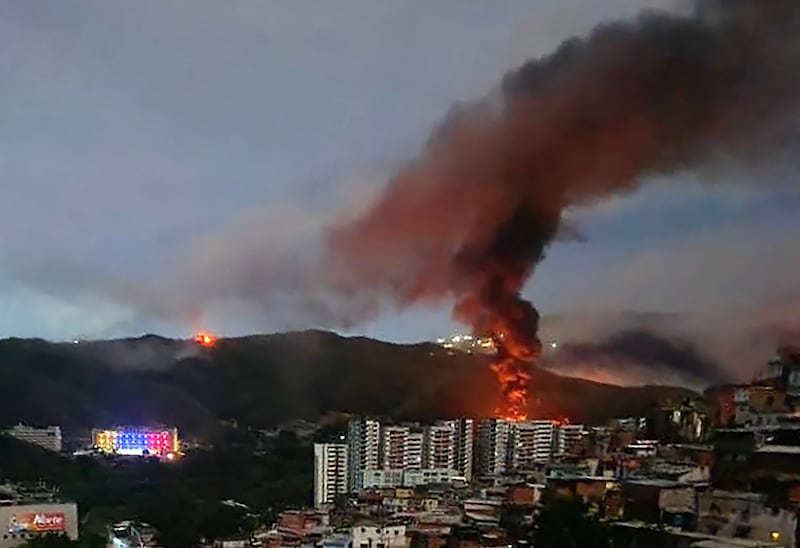
Trump’s comments came as other members of the administration had been carefully laying the groundwork to argue that Maduro’s capture was part of a criminal prosecution, not an act of war.
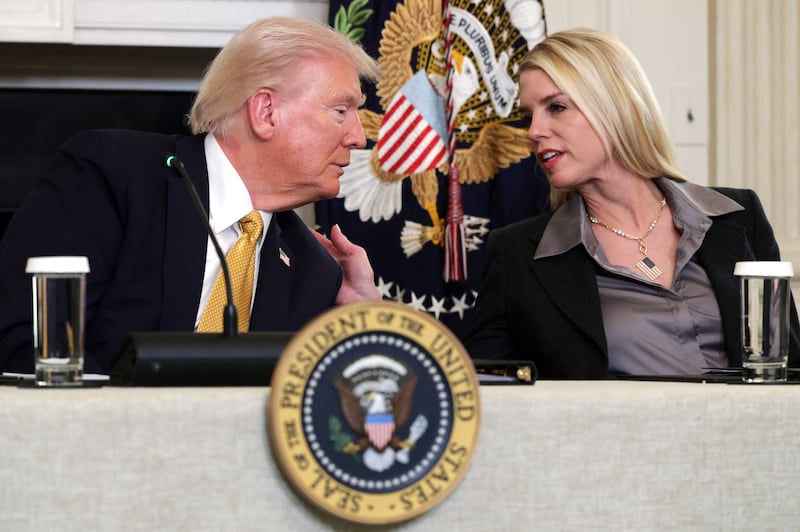
Attorney General Pam Bondi announced that Maduro and his wife, Cilia Flores, had been charged with narco-terrorism and were being brought to the U.S. to face trial in the Southern District of New York.
Secretary of State Marco Rubio assured skeptical senators that there would be no further action in Venezuela now that Maduro is in U.S. custody, according to Republican Sen. Mike Lee of Utah.
Trump, however, quickly debunked that claim.
“It’s a war,” he told Fox News. “We’re losing 300,000 people per year.”
The president has repeatedly claimed that 300,000 Americans die annually from drug overdoses, even though fewer than 80,000 overdose deaths were reported last year. Most of those deaths are due to fentanyl, which isn’t produced in Venezuela.

Trump has nevertheless tried to frame an increasingly violent campaign against Venezuelan targets over the past few months as a new “war on drugs,” ordering deadly strikes on alleged drug-smuggling boats in the Caribbean and Eastern Pacific, and a CIA drone strike at a docking facility in Venezuela.
Vice President JD Vance also pointed to drugs as he tried to deflect growing criticism about the legality of Trump’s large-scale strike against Venezuela and the deposing of Maduro.
“PSA for everyone saying this was ‘illegal’: Maduro had multiple indictments in the United States for narcoterrorism,” Vance wrote in a post on X. “You don’t get to avoid justice for drug trafficking in the United States just because you live in a palace in Caracas.”
In a statement to the Daily Beast, a senior White House official described Saturday’s attack as a “law enforcement operation” conducted by the Department of War and the Drug Enforcement Administration, at the DOJ’s request.
The DEA made the arrests, the official said.
“The gang of eight was notified, as a courtesy, when the operation began,” the official said, referring to House and Senate majority and minority leaders, and ranking members on the congressional intelligence committees.
Democratic House Leader Hakeem Jeffries, however, said in a statement on X that the Trump administration had “not sought congressional authorization for the use of military force and has failed to properly notify Congress in advance of the operation.”
Normally heads of state enjoy sovereign immunity for all acts except crimes against humanity. The DOJ, however, has created a loophole by refusing to recognize him as a head of state, thereby denying him diplomatic immunity.
The Trump administration appeared to be closely following the legal precedent used by President George Bush’s DOJ, which seized and charged Panamanian dictator Manuel Noriega in 1989, legal analyst Scott Horton wrote on Bluesky.
Noriega challenged his prosecution on the grounds that he had been illegally “abducted,” but a federal appeals court ruled that under a legal principle known as the Ker-Frisbie Doctrine, even if a defendant is illegally brought to the U.S., the court still has the right to try them.
That doesn’t mean, though, that Trump’s strikes on Venezuela were legal.
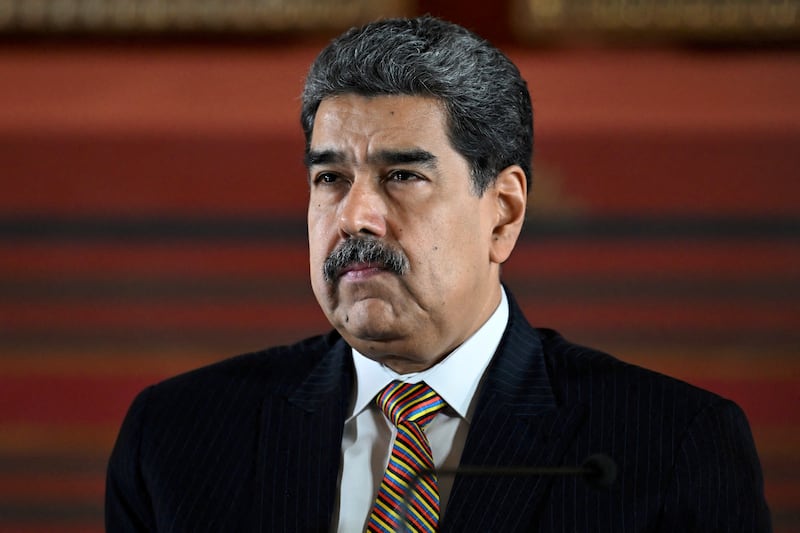
The U.S. has repeatedly tried to lure Maduro to the U.S. to face prosecution—including trying to pay off his pilot to reroute his presidential plane—but has always stopped short of a full-scale invasion.
White House Chief of Staff Susie Wiles herself admitted during a bombshell interview with Vanity Fair published last month that if the president expanded his attacks on alleged drug boats—which were already on shaky legal ground—to include targets on Venezuela’s mainland, he would need congressional approval.
“If he were to authorize some activity on land, then it’s war, then [we’d need] Congress,” she said.
The Daily Beast has reached out to the White House for comment.
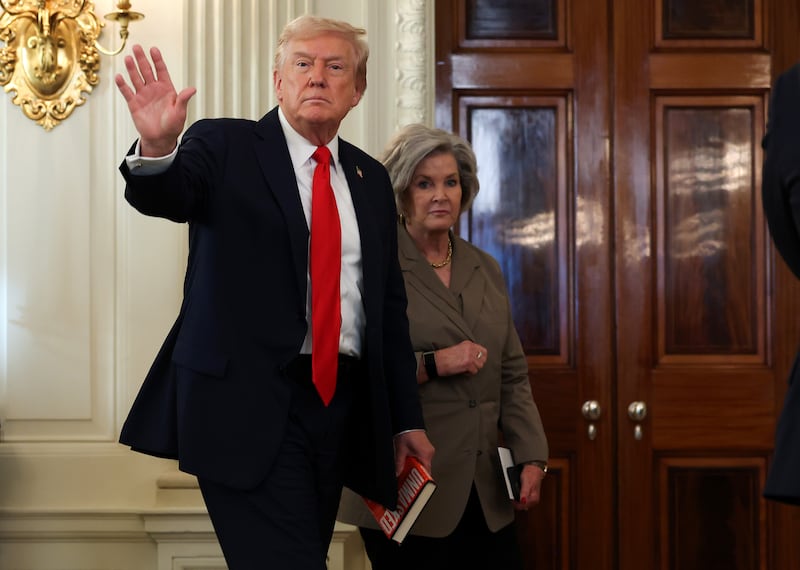
Besides violating the Constitution, some legal experts—and world leaders—say the strikes were a clear violation of international law, including the U.N. Charter’s Article 2 prohibition on wars of aggression.
The president could argue his strikes on Venezuela are a form of self-defense to prevent overdose deaths, but narcotics experts say Venezuela is a relatively minor player in the Latin American drug trade.
Virtually no coca is grown in the country, which serves as a secondary transit route for just 5 percent of the cocaine produced in neighboring Colombia, the world’s largest producer.
Most of the drugs passing through Venezuela end up in Europe, not the U.S., according to The New York Times.

Those facts have left many observers—including Maduro himself before his capture—arguing that the president’s interest in Venezuela has more to do with the country’s estimated 300 billion barrels of crude oil reserves, as Trump himself all but confirmed during his remarks to the press.
And with the Supreme Court granting Trump full presidential immunity from criminal prosecution for all “official acts,” the case has highlighted an awkward fact that the administration’s position is that U.S. courts can hold foreign presidents, but not U.S. presidents, accountable for crimes.