
One of the world’s richest people, who has kept his identity a secret for years, may have accidentally exposed himself.
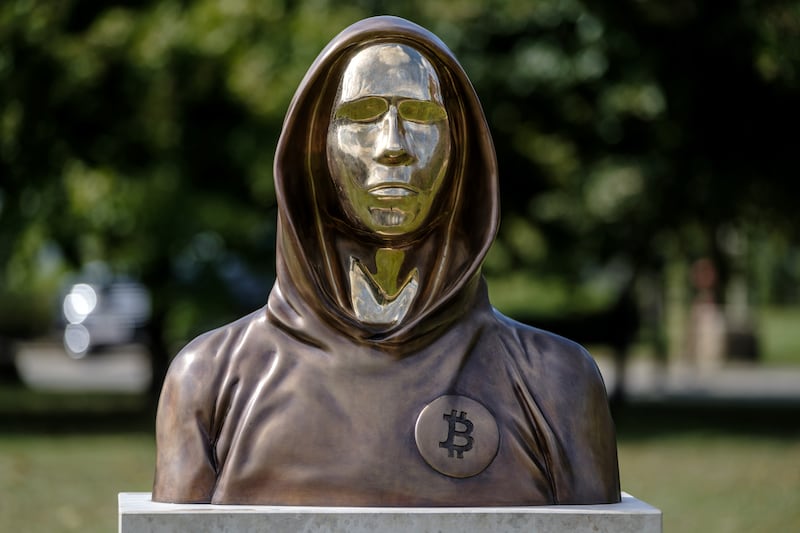
Journalists and online sleuths have been trying for more than 17 years to unmask the genius crypto inventor hiding behind the pseudonym Satoshi Nakamoto.
Nakamoto is thought to own 1.1 million bitcoins, worth around $71 billion. This would make them Forbes’ 26th richest person in the world.
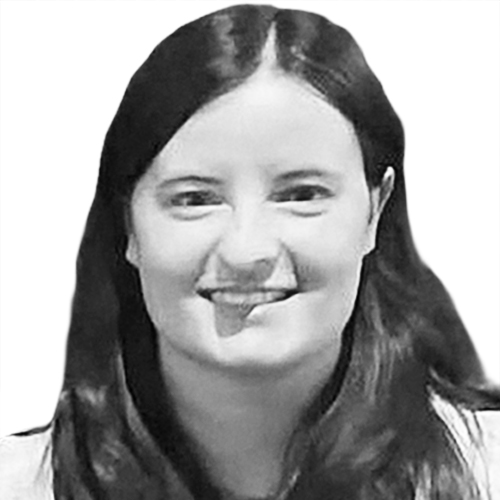
The New York Times business reporter, John Carreyrou, spent a year delving into old crypto forums to piece together a picture of who Nakamoto might actually be.

And it was a string of tiny punctuation mistakes that might have finally cracked the world’s biggest crypto whodunit. Carreyrou has surmised that British cryptographer and early investor Adam Back is the likely figure hiding behind the pseudonym.
However, Back strenuously denied this in several meetings and email exchanges with Carreyrou and posted on X after the journalist dropped his investigation to further deny it.
“I also don’t know who satoshi [Nakamoto] is, and i think it is good for bitcoin that this is the case, as it helps bitcoin be viewed a new asset class, the mathematically scarce digital commodity,” he wrote on Wednesday morning.
Back was confronted by the New York Times during an interview in El Salvador, where he was to speak at a crypto expo. “Clearly I’m not Satoshi, that’s my position,” he told the newspaper—adding, “And it’s true as well, for what it’s worth.”

Back, 55, is the CEO of Blockstream and the inventor of Hashcash, a proof-of-work system that Satoshi cited in the original bitcoin white paper. He has long been considered a plausible suspect, but until now had avoided the kind of forensic scrutiny applied to other candidates.
The Times analysis began with general observations: Back is British, was an active member of the Cypherpunks cryptography mailing list in the 1990s, and had outlined concepts remarkably similar to bitcoin nearly a decade before it launched.
He proposed distributed electronic cash systems with scarcity, privacy, and trustless verification—all features central to bitcoin’s eventual design. He even suggested using Hashcash to mint coins in an existing proposal called b-money, anticipating exactly how Satoshi would combine the two ideas. But the investigation’s more unusual findings came from forensic writing analysis.
Back and Satoshi both use two spaces between sentences, a hallmark of older writers. Both occasionally confuse “it’s” and “its.” Both place “also” at the end of sentences. Both alternate between British and American spellings.
Also revealing, according to the Times, was their shared misuse of hyphens—adding them where they don’t belong, and omitting them where they do.

Both wrote compound nouns like “double-spending” with hyphens, but left compound adjectives like “file sharing” and “hand tuned” unhyphenated.
When the Times fed an AI model New York Times-style rules and compared Satoshi’s hyphenation errors to those of hundreds of Cypherpunk mailing list contributors, Back emerged as the clear outlier. He shared 67 of Satoshi’s exact hyphenation mistakes. The next-closest candidate had 38.
The investigation also employed a filtering method, screening roughly 600 active forum participants for traits Satoshi displayed: using two spaces between sentences, British spellings, inconsistent hyphenation of “e-mail” versus “email,” confusion over “it’s” and “its,” and more. After applying each filter sequentially, only one name remained: Adam Back.

When the findings were presented to computational linguist Florian Cafiero, who had previously tried and failed to identify Satoshi using stylometry, he noted that while his own method proved inconclusive, the hyphenation and grammatical quirks were harder to dismiss.
Forensic linguist Robert Leonard of Hofstra University told the Times that such idiosyncrasies represent “markers of sociolinguistic variation”—linguistic fingerprints that can help identify an author.
The Times also noted behavioral parallels. Back largely disappeared from the Cryptography mailing list during the period Satoshi was most active, then re-emerged shortly after Satoshi vanished in 2011. When a researcher publicly estimated the size of Satoshi’s bitcoin holdings in 2013, Back joined the bitcoin forum that same day. Within two years, he had founded Blockstream and assembled the top Bitcoin Core developers under his roof.
Still, Back insists the evidence is circumstantial.
He clarified in a post on X, “I’m not Satoshi, but I was early in laser focus on the positive societal implications of cryptography, online privacy and electronic cash.”
He explained that his frequent posts on the Cypherpunks mailing list created a “confirmation bias” in studies trying to identify Satoshi, noting it’s “due to my volume I’d more likely have commented than others with similar interests but posting 20x less.”
Back added that the resemblance of some phrasing to Satoshi’s was largely coincidence, and emphasized that he “also don’t know who Satoshi is, and i think it is good for bitcoin that this is the case.”
When confronted with the linguistic findings, he told The New York Times: “I don’t know. It’s not me, but I take what you’re saying that this is what the AI said with the data. But it’s still not me.”