A politically influenced call by the MAGA-curious head of CBS News may have been behind the abrupt axing of an anti-Trump 60 Minutes segment on Sunday, according to an email sent by one of its correspondents.
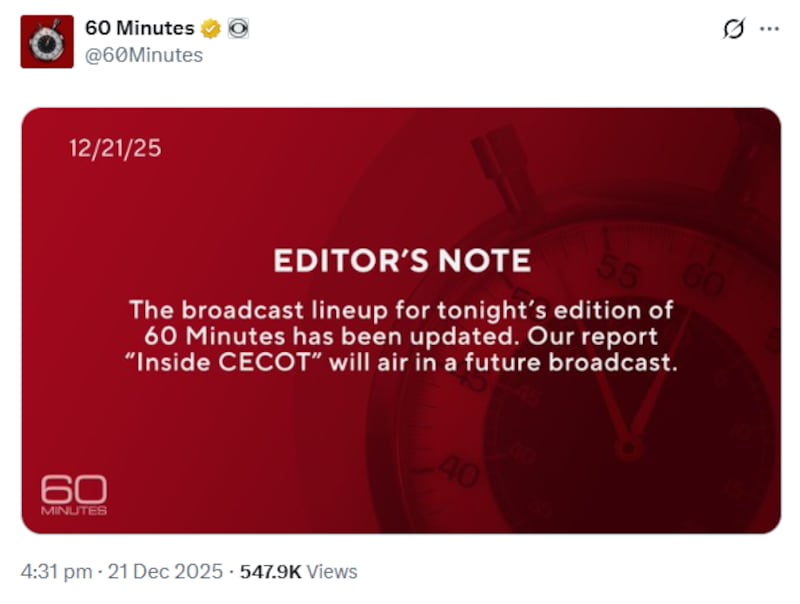
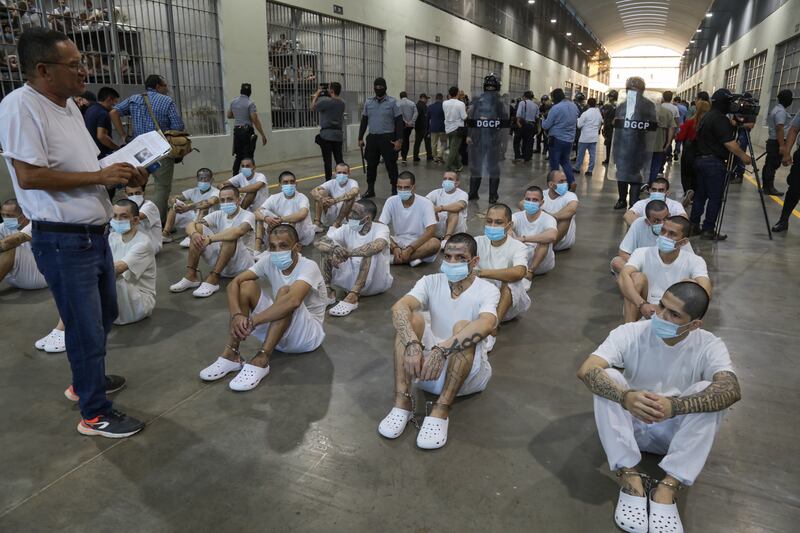
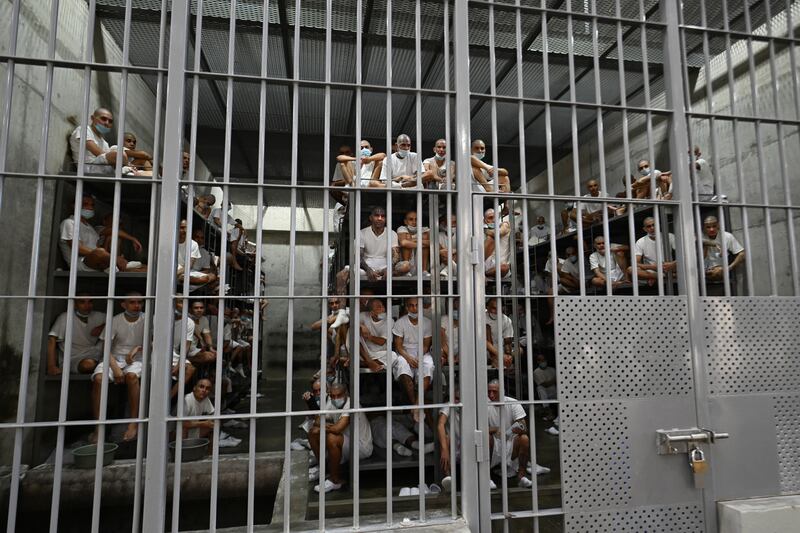
CBS had promoted a report on 60 Minutes that covered the infamous El Salvador megaprison CECOT, which houses immigrants booted out of the U.S. by Donald Trump.
The network said the segment on the Terrorism Confinement Center—dubbed CECOT or Centro de Confinamiento del Terrorismo in Spanish—will now air at a later date, with CBS claiming it needed additional reporting.

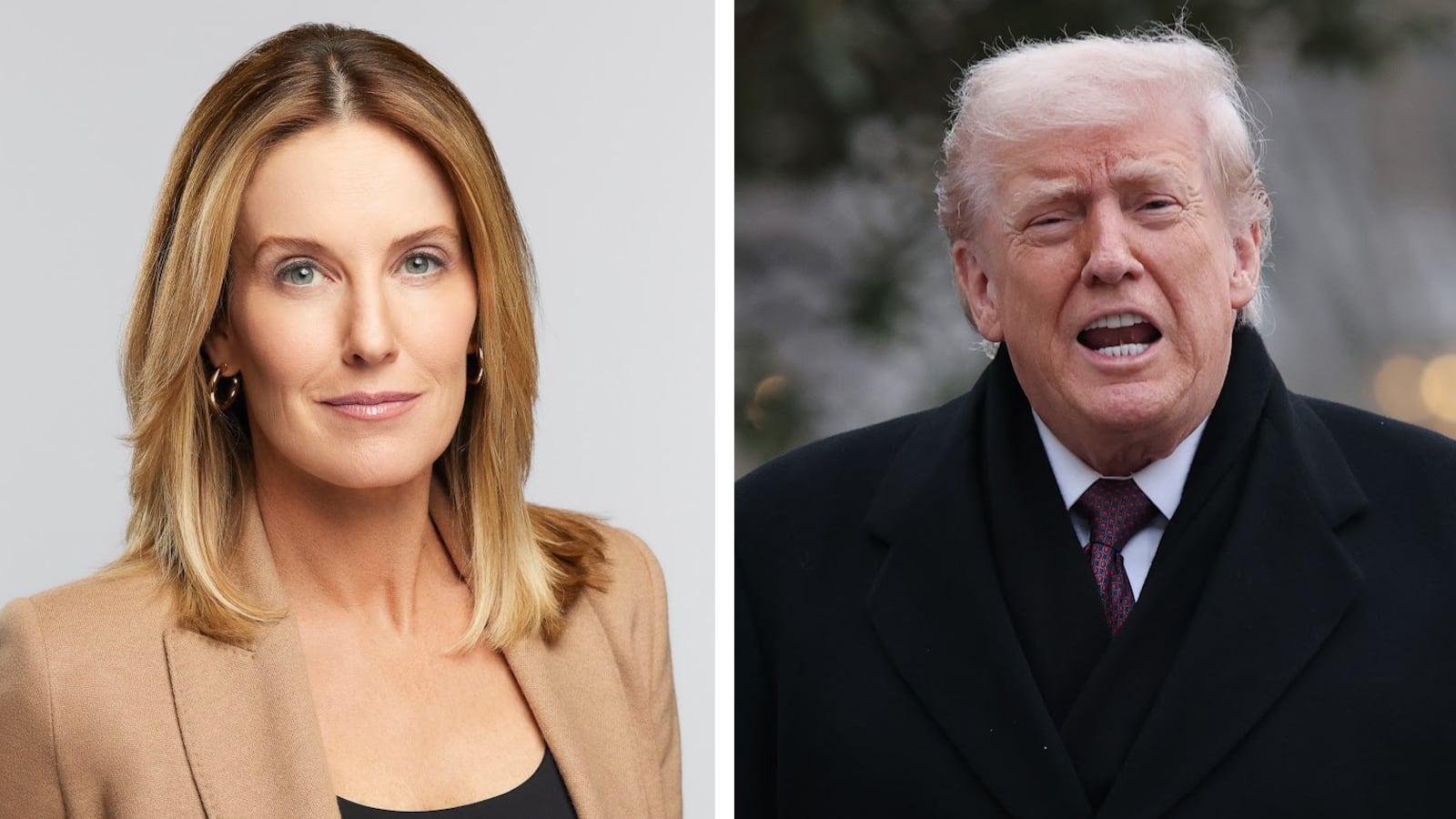
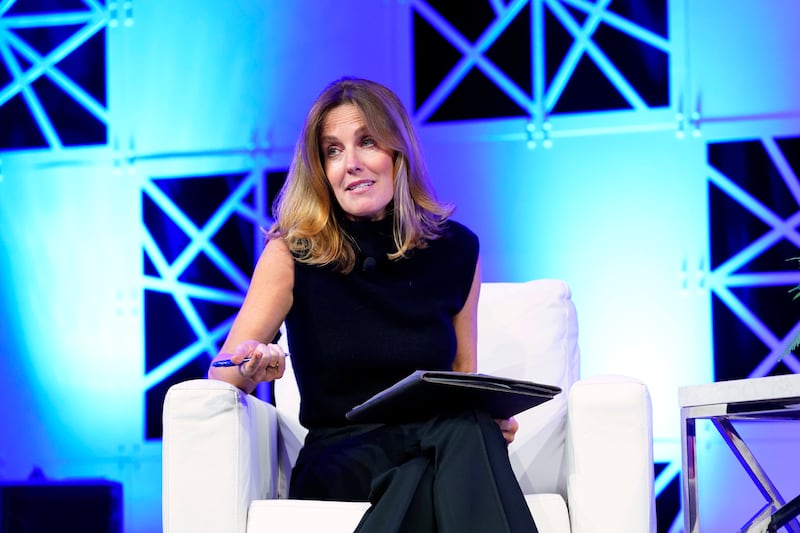
However, reports on Sunday night suggest that Bari Weiss, 41, the new editor-in-chief at CBS, flexed her muscle to yank the segment off the air with just three hours’ notice.
60 Minutes journalist Sharyn Alfonsi, 53, sent an email on Sunday stating that Weiss “spiked our story” and that the decision was political, not an editorial call, according to the Wall Street Journal.
The email was posted in full on X by CNN Media Analyst Brian Stelter, with Alfonsi writing that the team had asked Weiss to discuss her eleventh-hour call to pull the segment, but “she did not afford us that courtesy/opportunity.”

Alfonsi, who has worked on 60 Minutes for 10 years, reportedly sent the email to fellow correspondents Lesley Stahl, Scott Pelley, and Anderson Cooper.
“Our story was screened five times and cleared by both CBS attorneys and Standards and Practices. It is factually correct,” she wrote, noting that if the standard for airing a story became the government agreeing to be interviewed, the network would lose its editorial control. “We go from an investigative powerhouse to a stenographer for the state,” Alfonsi wrote.
Puck journalist Dylan Byers suggested the CECOT segment reflected “very negatively” on the Trump administration. “The admin had declined to comment,” Byers posted on X. “Bari Weiss saw segment on Friday and, I’m told, decided to hold it.”
Byers also disputed the official statement CBS gave to him that the piece needed additional reporting, quoting a “very well-placed source” who said, “It did not need additional reporting. It went through every layer of fact-checking and was reviewed by all the lawyers.”
Semaphor’s Max Tani also claimed that Weiss “had concerns” about the piece, adding “the network decided to hold the segment pending, among other things, comment or an interview with White House officials next year.”

Weiss suggested the CECOT piece needed an interview with Stephen Miller, the White House’s deputy chief of staff for policy, who has been outspoken about increasing ICE raids and deportations, the New York Times claimed. Weiss reportedly gave Miller’s contact details to 60 Minutes staff.
Weiss told the Times: “My job is to make sure that all stories we publish are the best they can be. Holding stories that aren’t ready for whatever reason—that they lack sufficient context, say, or that they are missing critical voices—happens every day in every newsroom. I look forward to airing this important piece when it’s ready.”
Alfonsi’s leaked email stated that 60 Minutes had approached the White House, the State Department, and the Department of Homeland Security for comment to include in their story.
“Government silence is a statement, not a VETO,” she wrote in the email obtained by Stelter. “Their refusal to be interviewed is a tactical maneuver designed to kill the story. If the administration’s refusal to participate becomes a valid reason to spike a story, we have effectively handed them a ‘kill switch’ for any reporting they find inconvenient.”
Her memo stated that the 60 Minutes team “have a moral and professional obligation to the sources who entrusted us with their stories. Abandoning them now is a betrayal of the most basic tenet of journalism: giving voice to the voiceless.”
She signed off, “We are trading 50 years of ‘Gold Standard’ reputation for a single week of political quiet. I care too much about this broadcast to watch it be dismantled without a fight.”
A teaser for the segment has been deleted from 60 Minutes’ social media accounts, but is circulating online. The video shows chilling scenes from the Trump administration’s deportations earlier this year.
“It began as soon as the planes landed,” Alfonsi is heard saying. “The deportees thought they were headed from the U.S. back to Venezuela, but instead they were shackled, paraded in front of cameras and delivered to CECOT, the notorious maximum security prison in El Salvador, where they told 60 Minutes they endured four months of hell."
The Daily Beast has contacted the White House, Alfonsi, Paramount, and CBS for comment.
As part of her leaked memo, Alfonsi also referenced an infamous 60 Minutes segment that had been spiked.
In 1995, Jeffrey Wigand, a former employee at tobacco company Brown & Williamson, provided information to 60 Minutes involving claims his company had hidden the health risks of its cigarettes.
However, the network’s lawyers feared that if they covered the story, it might lead to a billion-dollar lawsuit from the cigarette company and potential brand damage ahead of a potential sale of CBS.

The Wall Street Journal went on to break the story, with 60 Minutes following behind. The scandal became the subject of the 1999 Al Pacino/Russell Crowe movie The Insider.
Alfonsi wrote, “CBS spiked the Jeffrey Wigand interview due to legal concerns, nearly destroying the credibility of this broadcast. It took years to recover from that ‘low point.’ By pulling this story to shield an administration, we are repeating that history, but for political optics rather than legal ones.”
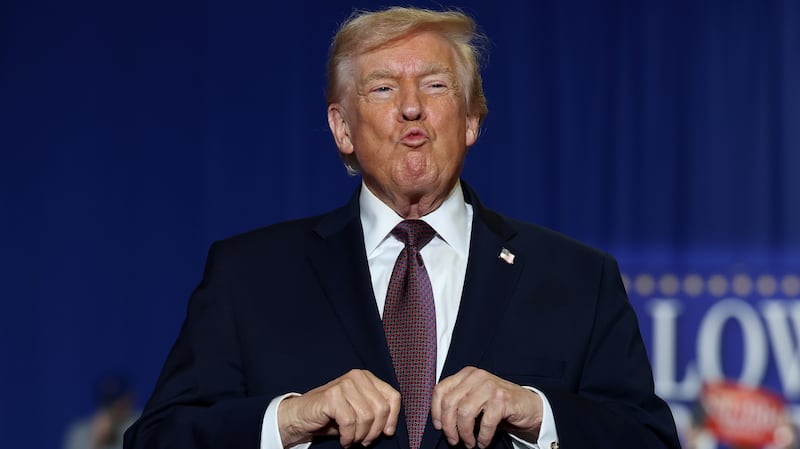
In July this year, Trump, 79, scored a major victory over the iconic current affairs show.
Paramount Global paid $16 million to Donald Trump’s presidential library to settle what was originally a $20 billion lawsuit over the editing of a 60 Minutes interview with Kamala Harris.
Trump was unhappy with the editing of Harris’s answer about Israel’s war in Gaza, claiming it amounted to distortion, although CBS said it had followed standard journalistic ethics when editing for timing reasons.
As part of the result, the two sides also agreed that “in the future, 60 Minutes will release transcripts of interviews with eligible U.S. presidential candidates after such interviews have aired, subject to redactions as required for legal or national security concerns.”
After the lawsuit was resolved, Paramount completed its merger with David Ellison’s Skydance.
Sunday’s 60 Minutes interference comes as Paramount, which owns CBS, is involved in a billion-dollar battle to take over Warner Bros. Discovery.
Paramount made a hostile, all-cash approach for the entire Warner Bros. business of $108.4 billion, on Dec. 8, valuing the business at $30 per share. Netflix, meanwhile, had already agreed to take its Studios and HBO Max streaming platform for $72 billion, a deal that executives at Warner still believe is the better offer.
As of last week, the Warner board recommended that shareholders reject the Paramount bid, orchestrated by Chief Executive David Ellison and his father, Larry, a friend of President Donald Trump.
Warner execs told investors that Paramount had “consistently misled” them, called the deal “illusory,” and said it posed a potential danger to the business if it were to accept.