U.S. intelligence experts believe that President Donald Trump’s claims about Iranian threats to the U.S. are vastly exaggerated.
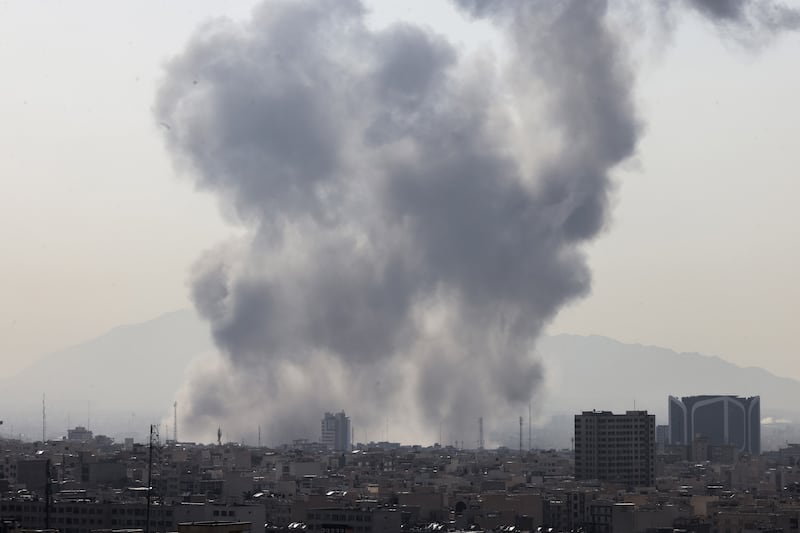
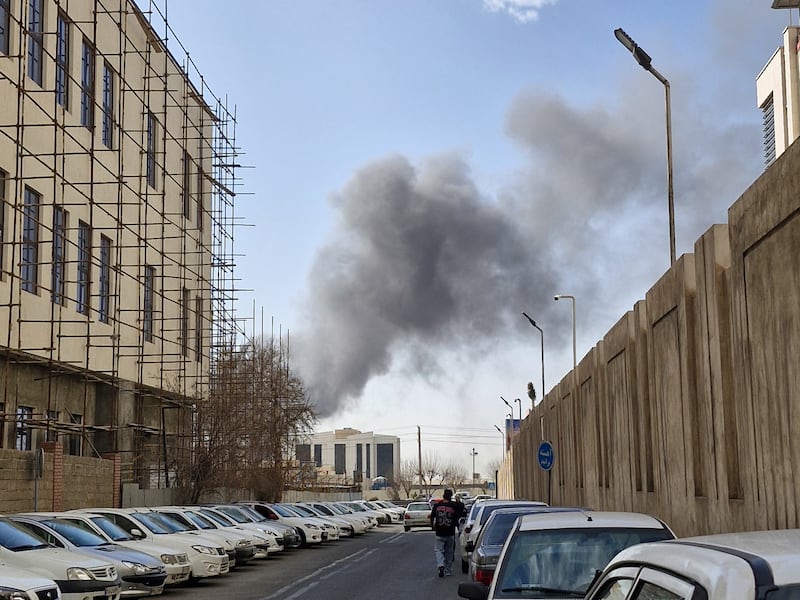
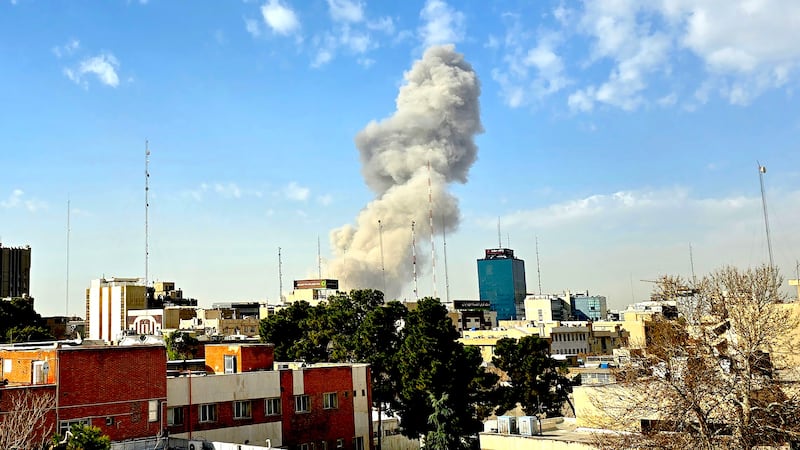
Trump, the self-proclaimed “President of Peace,” launched a wave of missile strikes on Iran early Saturday morning, telling the public in a prerecorded address that the U.S. military had begun “major combat operations.”
The strikes, unauthorized by Congress and performed alongside Israel, are designed to stop this “very wicked, radical dictatorship from threatening America and our core national security interests,” Trump, 79, claimed in the video message. “We are going to destroy their missiles and raze their missile industry to the ground.”

He accused the Iranian regime of building missiles that “could soon reach the American homeland.”
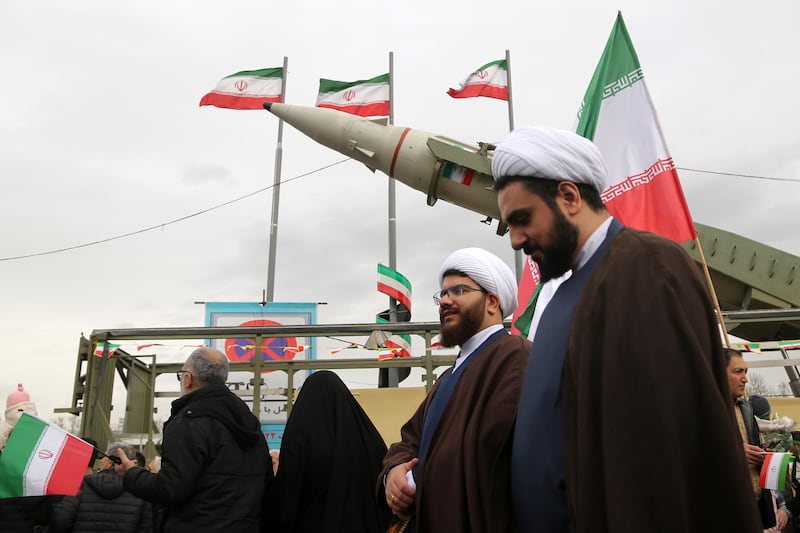
However, this argument, which he also peddled during his State of the Union address Tuesday night, is tenuous at best. While Iran has a vast arsenal of short and medium-range ballistic missiles capable of hitting Israel and U.S. military bases in the Middle East, it is years away from producing the intercontinental ballistic missile Trump warned of.
In an assessment from May last year, a month before Trump’s first strikes on the country, the U.S. Defense Intelligence Agency (DIA) said it would actually take nearly a decade for Iran to produce such weaponry.
The report, titled “Current and Future Missile Threats to the U.S. Homeland,” stated that the regime could produce a “militarily-viable” intercontinental ballistic missile by 2035, “should Tehran decide to pursue the capability.”
Sources told CNN that any suggestion otherwise is false. No intelligence suggests Iran is building an ICBM program to hit the U.S. at this time, they said. Three sources confirmed that Iran currently has no interest in expanding its capabilities in this field.
Indeed, Iran’s Foreign Minister Abbas Araghchi said in an interview this week that Iran was not developing long-range missiles. “We have deliberately limited the range of our missiles to 2,000 kilometers,” he told India Today TV. He added that their short-range missiles are for defense.
Despite the lack of intel suggesting Iran has ICBMs and a mind to use them on America, White House spokesperson Anna Kelly responded to CNN’s reporting, saying, “President Trump is absolutely right to highlight the grave concern posed by Iran, a country that chants ‘death to America,’ possessing intercontinental ballistic missiles.”
On Wednesday, Secretary of State Marco Rubio was less sure. He told reporters that Iran was “certainly” trying to develop intercontinental ballistic missiles.
The New York Times reports that Iran has “steadily increased” the range of its ballistic missiles, but the most powerful in its arsenal can only reach Central and Eastern Europe.
Three American officials with access to current intelligence about Iran’s missile programs said that Trump’s claims were purposely exaggerated. One added that some intelligence analysts have grown “concerned” that Trump’s top aides are inflating and distorting the threat to the U.S.
The argument that Iran is days away from being able to produce working nuclear weapons has also been debunked. It has been used by top White House officials in recent days to justify military operations in Iran.
Steve Witkoff, one of President Trump’s top negotiators, stoked urgency when he said last week that Iran was “probably a week away from having industrial-grade bombmaking material.” This, it must be noted, is despite the U.S. teaming up with Israel last June and “obliterating” the country’s nuclear capabilities.
Though not obliterated, Iran’s three main nuclear sites at Natanz, Fordo, and Isfahan, were badly damaged in the attacks. Experts therefore believe it unlikely that the country has produced a working nuclear warhead. Additionally, officials who have been briefed on U.S. intelligence assessments said that the regime has not built any new nuclear sites since the strikes last June, The Times added. This is despite activity at two partially finished sites unaffected by “Operation Midnight Hammer.”
Even Rubio acknowledged on Wednesday that there was no evidence the Iranians were enriching nuclear fuel to make the weapons the White House has used to justify the latest sortie, the so-called “Operation Epic Fury.”
The White House has been contacted for comment.