The Pentagon has a new theory of national security: journalists can be dangerous if allowed to roam freely.
That’s the argument at the heart of a remarkable court fight playing out between the Pentagon and The New York Times.
The Defense Department has asked a federal judge to keep in place its escort rule, which requires journalists to be accompanied by an official whenever they enter the building, while it appeals a ruling that struck down broader restrictions on the media.

The argument leans heavily on a sworn declaration from Pentagon Press Secretary Kingsley Wilson, who painted a dark picture of reporters lurking near power, watching who comes and goes, and asking inconveniently well-timed questions. For many people, this is the definition of journalism.
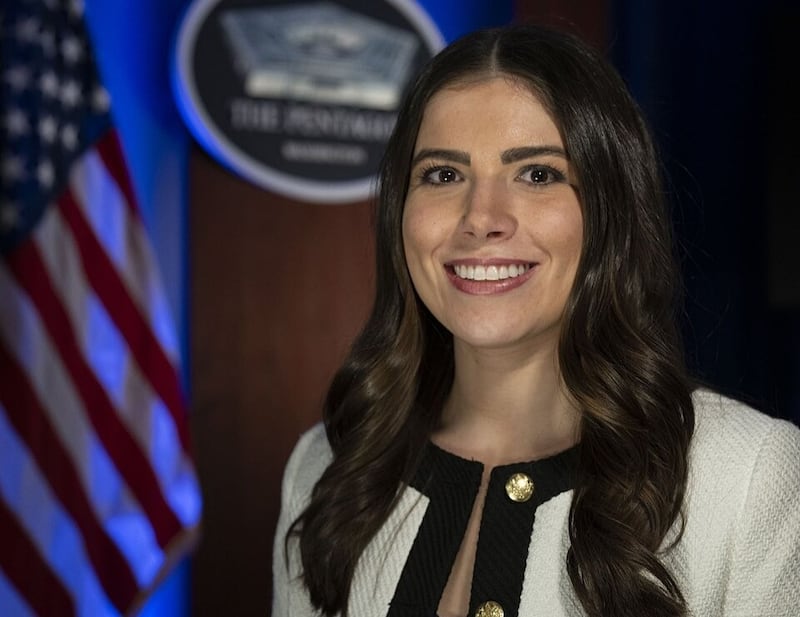
Wilson, 27, is a relatively new—and controversial—face inside the Pentagon, having taken over as press secretary in May 2025.
Her rapid ascent has fueled nepotism accusations, with her rise reportedly aided by her husband’s MAGA political connections—including ties to former congressman Matt Gaetz, according to The Daily Mail.
Wilson‘s father, Steve Cortes, is a longtime Donald Trump ally who served as a senior adviser during his 2016 and 2020 presidential campaigns.
At the center of her argument is a striking claim: that journalists with access weren’t breaching security, they were simply watching too closely.
“Unescorted access allowed journalists to maintain a persistent physical presence near sensitive spaces within the Pentagon,” Wilson said in her affidavit.

“This presence enabled journalists to observe activity patterns… that could be used to identify individuals with access to specific sensitive information.”
Before the crackdown, she said, journalists were regularly coming into possession of sensitive or classified information, sometimes “multiple times per month.”
But Wilson didn’t cite a single instance in which a reporter physically breached security. Instead, she argued that proximity alone allowed journalists to track movements and piece together sensitive information to guide their reporting.
The Pentagon insists that kind of access is a threat.
In its filing, the Pentagon warns that letting journalists roam freely creates “acute dangers,” especially in a volatile global moment with U.S. forces potentially engaged in Iran.
Wilson raised the stakes even higher, warning that any “disclosure of classified information relating to this operation could have immediate and irreversible consequences for the safety of American service members and the success of military objectives.”
Lawyers for The New York Times, which sued over the restrictions, said there has never been a documented case of a journalist causing a physical security breach inside the Pentagon.

A federal judge appeared to agree, and has now twice knocked down major parts of the department’s media crackdown as unconstitutional.
The Pentagon’s response? Narrow the fight.
After its broader restrictions were tossed, it pivoted to something simpler: escorts.
Under the policy, journalists must be accompanied by Pentagon staffers at all times, curbing their ability to move freely throughout the building. They can still attend briefings and interviews, but only under supervision.
In other words, it limits journalists’ ability to do their jobs.
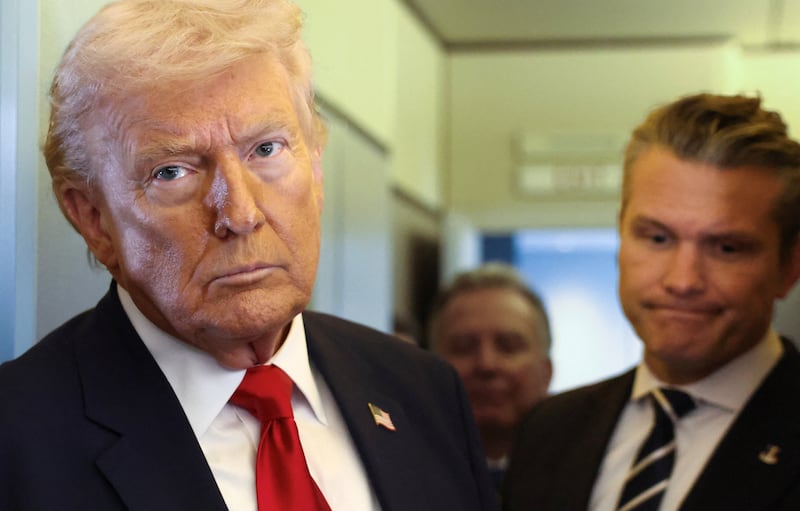
The policy arrives amid a broader push by Defense Secretary Pete Hegseth to rein in the press corps, from booting outlets from their workspaces to flirting with the idea of banning individual reporters.
Now, the department is asking the courts to bless a system in which journalists are not allowed to work independently.
Because left alone, they might start connecting dots, and that, apparently, is the real risk.